Showing posts with label America. Show all posts

Monday, July 23, 2012

America's most crowded beaches

Every time a summer heat wave hits, fleeing to the beach is a no-brainer. Of course, that’s what everyone is thinking. And some beaches get more crowded—a lot more crowded—than others.

The state of Florida has the greatest number of congested beaches on our list; its two coastlines offer seemingly endless stretches of sand, from Miami’s party scene to secluded Caladesi Island. But it’s California that claims the questionable honor of America’s No. 1 most crowded beach: Venice Beach, to be precise, which attracts 16 million sunbathers, fortune-tellers, street performers, and people-watchers every year.

If you’re heading to any of these beaches, try to time it right by skipping the weekends or going early in the morning—so that you can appreciate the combination of natural beauty and boardwalk amusements that made these beaches popular in the first place.

See more of America's most crowded beaches

 
Venice Beach, CA (Photo: Scott Tucker / Alamy) 
1) Venice Beach, CA

Annual Visitors: 16,000,000

It can be hard to tell the sunbathers from the fortune-tellers, artists, vendors, and assorted street life that populates America’s most crowded beach. Whether you’ve come to surf the Venice Breakwater, play a little basketball, or people-watch while strolling the boardwalk, it helps if you’re not claustrophobic.

Source: L.A. Beaches & Harbors


Miami Beach, FL (Photo: Edward DeGuzman) 
2) Miami Beach, FL

Annual Visitors: 13,268,841

If you hope to make the scene this summer in Miami, get in line because so do millions of other visitors. The preening and posing might be most competitive at South Beach, but there are 15 other beaches, such as Bal Harbour and Sunny Isles, where visitors and residents of South Florida negotiate for a little R&R space.

Source: U.S. Lifesaving Association


Coney Island (Photo: Jon Gilbert Leavitt 2010) 
3) Coney Island, Brooklyn, NY

Annual Visitors: 11,164,975

Coney Island began attracting the masses in the 1830s and shows no sign of losing its singular appeal nearly two centuries later. Amusement rides both new (Luna Park’s Scream Zone) and old (Cyclone roller coaster), Nathan’s Hot Dogs, and Cyclones baseball games are persuasive reasons to brave those crowds.

Source: U.S. Lifesaving Association


Newport Beach, CA (Photo: Roshan Vyas)
  
4) Newport Beach, CA

Annual Visitors: 9,446,850

Back in 1905, the Pacific Electric Railway started bringing beachgoers to this stretch of Orange County. Now they arrive by different means, but in far greater numbers, crowding the strands of Corona del Mar State Beach and Crystal Cove State Park, while surfers stake out the area between Newport Pier and the Santa Ana River. But whether you’re trying to jog on the boardwalk or jockey for space at The Wedge for a little bodysurfing, show up early to avoid the masses.

Source: U.S. Lifesaving Association


Daytona Beach, FL(Photo: Peter Adams Photography Ltd / Alamy)
 5) Daytona Beach, FL

Annual Visitors: 8,000,000

Not everyone is a NASCAR fan in Daytona, the headquarters for the sport. It just seems that way on this famed beach with hard-packed sand that permits cars and has been the epicenter of motor sports for decades. Keep your eyes peeled for cars as well as 8 million fellow humans, especially during events like the NASCAR Coke Zero 400 race each July.

Source: Daytona Beach Area Convention & Visitors Bureau


 Huntington Beach (Photo: Don Rasmussen) 
6) Huntington Beach, CA

Annual Visitors: 7,936,526

Strap the longboard to the roof, you’re in Surf City USA. HB, as it’s also known, has 8.5 miles of sandy beach and is the heart and soul of America’s surfing culture, with some of the best surf breaks in California. On the flip side, that means this is one of the state’s most consistently packed beaches.

Source: U.S. Lifesaving Association


Hollywood, FL (Photo: Andy Arecco) 
7) Hollywood, FL

Annual Visitors: 7,727,987

The 2.5-mile-long terracotta-colored path skirting this white-sand beach qualifies as one of America’s best beach boardwalks. But expect to find tons of joggers, skaters, and cyclists, not tranquility. The Jet Ski rental shops and restaurants like Le Tub do big business, and even the coral reef off Greene Street can seem crowded at the worst of times.

Source: U.S. Lifesaving Association


Waikiki Beach, HI (Photo: istockphoto.com)
 8) Waikiki Beach, HI

Annual Visitors: 7,535,000

Framed by Diamond Head, one of the world’s most climbed (extinct) volcanoes, and with nearly two miles of continuous white sand and palm trees, this iconic Hawaiian beach fills up with tourists and surfers. It is deepest, about 100 feet, in front of the bright pink Royal Hawaiian Hotel. The bathtub-temp turquoise water is ideal for swimming, and waves are usually gentle.


Jones Beach, NY (Photo: David Zimmerman / CORBIS)
 9) Jones Beach, NY

Annual Visitors: 5,100,000

Hugging the southern shoreline of Long Island, this 10-mile beach resembles Grand Central Station at rush hour on a hot Saturday in August. On those dog days of summer, you need to search hard for a place to spread out a towel that doesn’t infringe upon someone else’s turf.

Source: NY State Parks Department


Brevard County, FL (Photo: E. Johan Foster) 
10) Brevard County, FL

Annual Visitors: 4,776,993

Sun-seekers in the Brevard area flock to the North Reach in Cape Canaveral, Cocoa Beach, and Melbourne Beach. Surfing is one popular draw, and an afternoon dip in the ocean pairs nicely with a morning devoted to another element—air—at the nearby NASA Kennedy Space Center. 

Source: U.S. Lifesaving Association


See more of America's most crowded beaches

America's emptiest cities, 2012

It’s no secret that the U.S. housing market has seen better days. From falling home values and impaired labor mobility to backed-up inventories and a flood of foreclosures, the real-estate downturn has affected the economy at large in countless ways.

One of the unfortunate results of a bad housing market are empty homes. Vacant properties have increased by 43.8 percent nationwide since 2000, according to the Census Bureau. Homes can be vacant for many reasons, but are defined by the bureau as both unoccupied rental inventory as well as homes that are unoccupied and “for sale.” As of 2011, there were about 14.3 million year-round vacant housing units in the country, with a 10.6 percent gross vacancy rate that excludes seasonal vacancies such as vacation homes.
See the full slideshow: The 10 Emptiest U.S. Cities 2012


Earlier this year, the Cleveland Federal Reserve analyzed the impact of foreclosed and vacant homes on the surrounding communities. The study found that a vacant or tax-delinquent house decreases the value of nearby homes by at least 1.3 percent, thanks to poor maintenance, and making the neighborhood appear less desirable.

This effect is amplified in higher-income neighborhoods where a vacancy or foreclosure has a negative price impact of 4.6 percent. In low-poverty areas, each additional vacant or tax delinquent home was found to reduce values of surrounding properties by between 1.7 percent and 1.8 percent.

Each quarter, the Census Bureau publishes data on homeowner and rental vacancies in the 75 largest cities. Listed here are the five cities with the most vacancies, using a weighted ranking of both rental and homeowner vacancies based on a 12-month average of both kinds of vacancy rates to smooth out sampling errors. Weights are assigned to rental and homeowner vacancies according to the national proportion of homes to rental properties in the U.S. Our list reveals the most significant outliers in both categories relative to other major U.S. cities.

So, what are the emptiest major U.S. cities? Read on to find out:


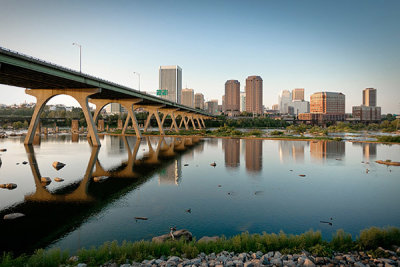
5. Richmond, Va.
12-Month Averages:
Rental vacancy rate: 15.1%
Homeowner vacancy rate: 2.4%

With a rental vacancy rate of 15.1 percent, Virginia's capital ranks fourth among all major U.S. cities for empty rentals over the past year, with the first quarter of 2012 showing a 19 percent rental vacancy rate. However, Richmond’s homeowner vacancy rate ranks only 27th among the country’s 75 largest metro areas, and stands just 0.2 percent higher than the average for large metro areas.


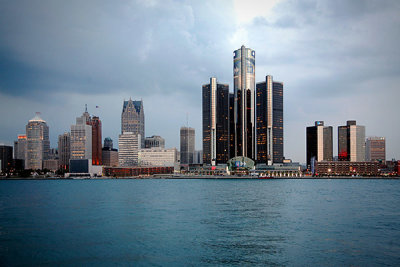
4. Detroit
Rental vacancy rate: 16.9%
Homeowner vacancy rate: 1.7%

Detroit was one of the hardest-hit cities in the recession, and with an unemployment rate of 9.9 percent as of May, it's little wonder that its 16.9 percent rental vacancy rate is the second highest in the country. Surprisingly, though, the homeowner vacancy rate remains below the 75 largest metro area's average of 2.18 percent. According to the Census Bureau, at the end of 2011, Detroit had a gross vacancy rate of 12.2 percent, a level the city has virtually maintained since 2006.


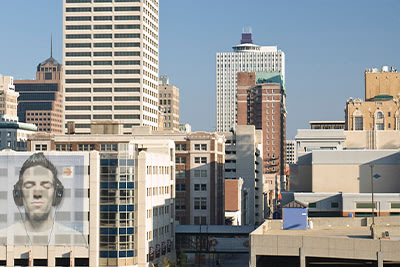
3. Memphis, Tenn.
Rental vacancy rate: 15%
Homeowner vacancy rate: 3.1%

Memphis' proportion of vacant homes, both owned and rentals, puts it third overall, thanks to an average rental vacancy rate of 15 percent that is the fifth highest in the nation and the 3.1 percent homeowner vacancy rate that ranks 13th.


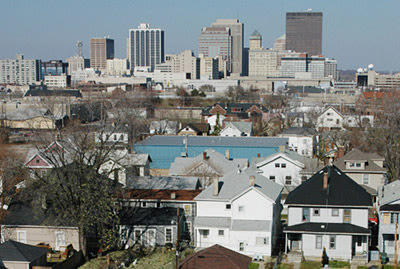
2. Dayton, Ohio
Rental vacancy rate: 11.3%
Homeowner vacancy rate: 5.4%

The good news is that Dayton's homeowner vacancy rate has been trending downward since its peak in the third quarter of 2011, when it stood at 6.5 percent.

However, even this improving number gives Dayton the distinction of having the highest average homeowner vacancy rate in the country, according to the Census Data. And Dayton’s average rental vacancy rate, at 11.3 percent, is higher than the 75-city average of 9.2 percent. The Census Bureau calculations put Dayton’s gross vacancy rate at 16.9 percent, more than 6 percent above the large city average, and the highest in the country.

 
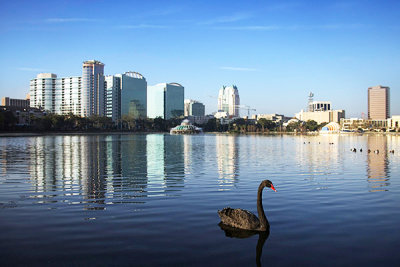
1. Orlando, Fla.
Rental vacancy rate: 18.8%
Homeowner vacancy rate: 2.2%

The emptiest city in the United States is Orlando, Fla. The 12-month average for rental vacancies stands at a staggering 18.8 percent, while in the first quarter of 2012 this number was 22 percent, highest in the nation. Florida's third-largest city also has an above-average homeowner vacancy rate, but this metric has been rising during the past two quarters, according to Census Bureau data.

Despite its housing woes, Orlando has been able to avoid the financial woes of other cities, such as Harrisburg, Pa., and San Bernardino and Stockton, Calif. According to Orlando’s most recent annual report, the city has more than $125 million of cash in its general fund and over $1.1 billion in total assets (including nearly an additional $300 million in cash and cash equivalents in other funds), compared with just under $600 million in total listed liabilities.

See more of America's emptiest cities.

Wednesday, July 18, 2012

America's best free attractions


The Freedom Trail, Boston (Photo: reynolds.james.e / Flickr)The Freedom Trail, Boston (Photo: reynolds.james.e / Flickr)

America is the land of the free—and that applies to many of the country's star attractions as well. Make the most of your summer by visiting these famous spots around the United States; you won't have to pay a penny to do it.

Tired of spending layovers in an airport?  Download Yahoo! TimeTraveler on your iPhone to create custom itineraries based on your location and amount of time you have to spend.

The Freedom Trail, Boston


Learn history, see the city, and get some exercise at the same time with a walk along Boston's Freedom Trail. This 2 1/2-mile path highlights 16 sites that are historically significant to the American Revolution, and they are all free. Visit the Freedom Trail's website to read up on the Bunker Hill Monument and the Paul Revere House, among others, and prepare yourself for a self-guided tour. Best of all, for the directionally challenged, the trail is clearly marked the whole way by a red painted line or a brick path.


(Photo: David Carillet/Shutterstock)

Great Smoky Mountains National Park,
North Carolina and Tennessee


Great Smoky Mountains National Park is one of the few major American national parks that don't charge admission (and there's actually a deed restriction on the land saying that no toll or fee will ever be imposed). The park has so much to offer. Into wildlife? Come here to spot hundreds of species, from bears to deer. Looking for a more cultural experience? Learn about the history of the southern Appalachian region. Active visitors will be endlessly entertained as well, with many options for hiking, biking, and riding.


(Photo: Lincoln Park Zoo)

Lincoln Park Zoo, Chicago

Lions, gorillas, and other wild creatures live just minutes away from downtown Chicago in Lincoln Park Zoo. The zoo is free and open every day of the year, making it an easy stop on any Chicago tour. Check the zoo's daily calendar for inspiration on what to see—you can watch sea lion training, see cows being milked at the zoo's farm, or even pet a goat. Make your visit even more fun by downloading the free SpotDash app, which will take you on a scavenger hunt throughout the zoo and the rest of the city.

(Photo: Thinkstock/Comstock)

The National Mall, Washington, D.C.

From the new Martin Luther King, Jr. National Memorial to the famous Smithsonian Castle, some of America's most iconic sights can be found on the National Mall. Everything along this open-air national park is free, from world-class museums in the Smithsonian complex to historical sites, such as the Capitol. There's even a free app you can download to help you find your way, learn facts, and create your own self-guided tours.


(Photo: Thinkstock/iStockphoto)

Golden Gate Bridge, San Francisco

This year marks the 75th anniversary of the Golden Gate Bridge, so why not celebrate with a visit? Don't spend money on a tour; instead, download a free app (available for iPhone and Android) and learn behind-the-scenes trivia, get expert advice, and even listen to recordings of bridge workers' oral history. Walk or bike across the bridge and take in the fabulous views of San Francisco. Begin or end your visit with a stop in Golden Gate National Recreation Area, which can be accessed on either end of the bridge.


(Photo: trekandshoot/Shutterstock)

Independence National Historical Park,
Philadelphia

See America's second birthplace, Philadelphia's Independence National Historical Park. Although Washington is the nation's capital, Philadelphia was the home of Congress and the Supreme Court for 10 years while the District was being built. Explore the remnants of that history at this large national park, where you can view the Liberty Bell, tour Old City Hall, or just enjoy the public green spaces. Everything is free except for the National Constitution Center. You will need tickets for tours of Independence Hall, but they won't cost a thing.


The Getty Center, Los Angeles

The Getty Center, one of Los Angeles' best art museums, is free. Permanent exhibitions feature important pieces like Vincent Van Gogh's Irises and Claude Monet's Sunrise (Marine), and there are always rotating exhibitions like Portraits of Renown: Photography and the Cult of Celebrity, which runs through Aug. 26. Be sure to leave time to visit the recently reopened Central Garden in the heart the museum, where you can see a waterfall, specialty gardens, and more than 500 different varieties of plants. The Getty is closed on Mondays, so plan your visit for any other day.


(Photo: Jean-Paul Gisclair/NewOrleansOnline.com)

Jackson Square, New Orleans

Experience the real feel of New Orleans in Jackson Square. This public space houses an open-air artist colony where you can browse or buy work by local artists (or even just watch them create). Here, you'll find one of New Orleans' most recognizable landmarks, the St. Louis Cathedral, which is also free to enter, as well as the statue of Andrew Jackson, after whom the park is named.


International Rose Test Garden, Portland, Ore.

Make time to stop and smell the roses—all 10,000 of them—at Portland's International Rose Test Garden. This 4 1/2-acre garden features new varieties of roses, beautifully maintained landscaping, and the Shakespeare Garden, which includes herbs, trees, and flowers mentioned in The Bard's works. The rose garden has been in use since 1917, and it even harbored hybrids from Europe for safekeeping during World War I. The best time to visit is June through October, when the roses are in bloom, but the grounds are open year-round. It's free to look in the garden, but don't touch—you'll face a $500 fine if you try to take any roses home with you.


(Photo: Jenny Rotner/NYCGo)

Central Park, New York City

A green oasis in the middle of bustling Manhattan, Central Park offers open spaces, beautiful views, and peace and quiet. Tour the 55 monuments, memorials, and sculptures, watch a game at one of its 26 ball fields, or hike 130 acres of woodlands. If you have kids, let them run wild on the park's 21 playgrounds, or do some running yourself on the park's many paths. Bring your own bicycle and go for a ride, or simply take a stroll around the Jacqueline Kennedy Onassis Reservoir. Pack a picnic, a blanket, and a Frisbee, and you can entertain yourself all day for free.

Wednesday, July 4, 2012

This 4th of July: The dawn of a new 'independents' day

A record-high 38 percent of Americans now describe themselves as independents. Republican and Democratic party leaders ignore this growing lack of party allegiance at their peril. Whichever party shifts to accommodate more moderate voters first will survive and even thrive.

This July 4th, as Americans celebrate Independence Day, a different type of independence is growing in size and influence – political independents, those voters who choose not to align with either major party.
A recent Pew Research Center poll captured headlines with its report that the divide between Democrats and Republicans is widening into a significant gulf. That's indeed noteworthy, but the data reveal an equally important political development that risks getting overlooked. A record-high 38 percent of Americans now describe themselves as independents.
That's more than those who align with Democrats (about a third) or Republicans (about a quarter). The shift is most striking among younger generations – 45 percent of Millennials and 42 percent of Generation Xers.
What might this rise foretell?
Although the numbers suggest there is political space for a third party to succeed, the American political system provides strong incentives for voters and political elites to align with two, and only two, parties.
Most elections in the United States allow only one winner, and whoever receives the most votes wins. If many parties competed for a single seat, a person could win office with 20 percent, 15 percent, or even fewer votes, leaving almost everyone dissatisfied.
At the presidential level, if more than two candidates seriously contend the general election, the chance of anyone winning a majority in the Electoral College narrows. And strong third-party candidates are often considered "spoilers." Many Democrats still grumble over Ralph Nader "stealing" the 2000 election from Al Gore, while many Republicans complain about Ross Perot helping Bill Clinton in 1992.
In this primary season, the grass-roots group Americans Elect attempted to make a way for a nonpartisan presidential candidate. It failed miserably. No candidate earned enough support to cross the threshold to nomination.
What are the options for independent candidates, if not a third party? Our system is stacked against them, too. Ballot-access requirements, major fundraising networks, and winner-take-all elections offer significant advantages to candidates with party backing. Primaries in most states exclude independent voters or force them to choose sides.
Independent and third-party candidates made it onto the ballot in only 18 percent of state contests between 2000 and 2009, winning about 2 percent of the races they entered.
Independents are most likely to succeed when they are tied to a party (like Sen. Joe Lieberman, the career-Democrat who won reelection as an independent after losing a primary) or are in idiosyncratic political places like Maine and Vermont. Independent US Senate candidate Angus King is capturing media attention and may very well win his senatorial bid in Maine; but his candidacy is an outlier, not the bellwether.
Both parties need independent voters to win. But have the parties forgotten this?
Campaign strategists have a simple recipe for success. They divide voters into three camps: ours, theirs, and up-for-grabs. Winning campaigns pay just enough attention to their committed voters to keep them happy and get them out to vote; they avoid voters who are solidly in the opponent's camp, and they focus most of their efforts on those most likely to be persuaded – like political independents.
When forced to choose between parties, most independents will pick a side. But the lack of willingness to align with a party suggests the parties have an image problem.
Consider this trend: Independents have surged and the parties have grown more polarized, yet underlying ideological views have changed little. In Pew Survey polls from 2000 to 2012, between 35 and 36 percent said they were conservative; about the same amount said they were moderate; and 18 to 22 percent said they were liberals.
The biggest defections appear to be from the Republican Party, as the recent rise in numbers of independents over the past decade has come almost entirely from conservatives and moderates (including some Democrat moderates).
Parties are not particularly popular, even in their own ranks. A majority of Democrats and those who lean Democratic say their party is doing only a fair or poor job of standing up for its traditional positions. Republicans and those leaning Republican are even more dissatisfied.
The growing lack of party allegiance and the high levels of dissatisfaction are trends that current party leaders ignore at their peril.
One need only look at the changing control of Congress over recent elections to see what happens when voters grow dissatisfied. In 2006, voters threw out Republicans; in 2010 they gave House Democrats the boot. Voter anger could flip control again.
Republican and Democratic party elites should be running scared. Polling data suggest and history confirms that American voters prefer broad-based parties that govern from the ideological middle, not from the extremes.
Whichever political party does the math first and shifts to accommodate more moderate voters will be well positioned to survive and even thrive in coming decades.
Amy E. Black is associate professor of political science and chair of the department of politics and international relations at Wheaton College in Wheaton, Ill.

Original Post Found Here..