Thursday, July 19, 2012

Boy dies after sand tunnel collapse in New Jersey

A 12-year-old boy who was rushed to the hospital after a sand tunnel collapsed on him at a New Jersey beach has died.
The boy and his brother were digging a tunnel at the Long Branch, N.J., beach late Tuesday when it collapsed on him, trapping him under the sand, police and witnesses said. Lifeguards pulled the boy out of the sand and began administering CPR. He was unconscious "with blood trickling from his nose," a witness told the Asbury Park Press.
The boy was rushed to Monmouth Medical Center, where he was placed in the pediatric intensive care unit. He was pronounced dead on Wednesday afternoon, hospital officials told the paper.
According to NBCNewYork.com, a fire truck responding to the tunnel collapse struck a man holding his infant son, "knocking them both to the ground." Both were taken to Jersey Shore Medical Center, NBC said. The father suffered broken limbs; the baby was "injured but not severely."
Sadly, deaths from sand tunnel collapses are not terribly uncommon. According to CBS News, there were at least 16 beach-hole-related deaths between 1990 and 2010. According to a 2007 report in the New England Journal of Medicine—"Sudden Death from Collapsing Sand Holes"—there were 31 over a 20-year span.

"At least once a day, lifeguards have to stop someone from digging a hole too deep," a lifeguard told the North County (Calif.) Times after an 18-year-old man nearly suffocated in a sand tunnel collapse. "Holes are a hazard for everyone who uses the beach."

'Dark Knight Rises' vs. 'The Avengers': Lack of 3D Will Limit Batman's Box Office

 Could "The Dark Knight Rises" sell more tickets on its opening weekend than "The Avengers" but still wind up making less money at the box office?
If it does, 3D -- or the lack of it in the case of "The Dark Knight Rises" -- would be the culprit.
"Dark Knight Rises" director Christopher Nolan has been among the loudest critics of Hollywood's rush to 3D, claiming it degrades the creative and viewing experience. "It's all about the money," he told the PGA's Produced By conference in May.
Just how much it's about the money could come into sharp focus starting Thursday midnight.
The last of three blockbuster Batman movies Nolan has made for Warner Bros., "Dark Knight Rises" is expected by analysts to open somewhere between $170 million and $195 million. That would make it the best U.S. opening ever-- for a non-3D movie.
Also read: 'The Dark Knight Rises to Detective Comics: Batman Through the Years'

If so, that "best debut ever" honor would still belong to Disney and Marvel's "The Avengers," which bowed to $207 million in the first week in May. About 52 percent of that total came from premium --aka more expensive-- 3D tickets. That adds up to about an extra $20 million, and while "Dark Knight Rises" will be on 332 premium-priced Imax screens, that could be the difference between the two films' first weekends.
"The Avengers" bowed on 4,349 screens in all, 3,364 of which were 3D, along with 275 Imax. "The Dark Knight Rises" will be in 4,404 theaters and 3,700 will offer midnight Thursday screenings.
Of course it isn't all about the opening weekend. Critics have been nearly rapturous over "Dark Knight Rises," with Christian Bale reprising the title role, and the film has cast a giant shadow on the cultural landscape all summer. The most conservative observers foresee a long and lucrative run both here and abroad.
Also read: AMC Adds 'Dark Knight Rises' Midnight Shows, Marathon Screenings to Meet Demand
But the smashing success of "The Avengers" and "Dark Knight Rises" will define the Hollywood's summer of 2012. And while executives at Warner Bros. and Disney are loathe to make any comparisons, it's hard to imagine bragging rights aren't on their minds.
And even with considerations surrounding 3D aside, most industry observers think "Dark Knight Rises" will have a tough time matching the opening and overall numbers put up by "The Avengers."
Also read: 'The Dark Knight Rises' Review: Falls Short of Bat-Legendary
"It was a perfect storm," Jeff Bock, senior analyst at Exhibitor Relations told TheWrap. "You had an audience primed for the summer's first big event, (director) Joss Whedon was making his debut and all the heat of the previous Marvel movies sort of culminated. It just clicked with audiences, even whole families, and it seemed to have just the right tone for a summer popcorn movie."
"Dark Knight Rises" has certainly built anticipation, evidenced by its huge presales. And the buzz surrounding Nolan's final entry in his Batman trilogy -- "Batman Begins" and "The Dark Knight" were the first two -- has been near fever-pitch for weeks. But the relentlessly dark and gritty tone of the film, which is at the core of its appeal to many adults, might cut both ways at the box office.
Also read: First 'Dark Knight Rises' Review: Holy Hyperbole, Batman!
"I doubt it will keep anyone away the first weekend," said Bock, "but it could cut into family and repeat business, both of which helped "The Avengers' significantly."
The last Batman movie, "The Dark Knight," was a huge financial success. With a production budget of around $185 million, it opened to $158 million in July, 2008 and went on to make $533 million domestically and more than $1 billion worldwide. That was a huge jump from the Nolan's first Batman film, "Batman Begins," which made $205 million after opening to $48 million.
The death six months before the opening of actor Heath Ledger, who was playing The Joker, the most iconic of Batman villains, spiked media and public interest in "The Dark Knight."
Also read: Can Bane Measure Up to The Joker in 'Dark Knight Rises'?
Tom Hardy, a newcomer to the cast along with Anne Hathaway, Marion Cotillard and Joseph Gordon-Levitt, has been front and center as fearsome bad guy Bane (above) in trailers for "Dark Knight Rises." But no matter how scary and fierce Hardy's Bane might be, it's hard to imagine he will capture the hearts and minds of moviegoers – or send them to the box office -- as did Ledger. The Australian actor was posthumously awarded the supporting actor Oscar for his role as the Clown Prince of Crime.
Another hurdle facing "The Dark Knight" in its pursuit of "The Avengers" is its running time of 2 hours, 45 minutes, as compared to 2 hours, 22 minutes for the Marvel film. That will cut into the number of times the film can be shown in a theater.
"If you have it playing 24 hours a day to packed houses, and I'm sure many theaters will," Bock said, "the numbers of times it can be screened could be at last one fewer per day. And that adds up."
Don't shed any tears for Nolan, Warner Bros. or the film's financier Legendary Entertainment, though. "The Dark Knight Rises" is expected to be among, if not the, most lucrative entry in the eight-film franchise, which has brought in more than $2.6 billion since it began with "Batman" in 1989.
And if "The Dark Knight Rises" opens to anything over $169 million -- the pre-"Avengers" record set by WB's "Harry Potter and the Deathly Hallows, Part 2" -- no one at Warmers will be unhappy.
Even if they're No. 2, with a 2D asterisk.

Four things car thieves love to see


Car theft is on the decline--and today, the chances that your vehicle will be stolen are lower than any time in the past 15 years.

The FBI estimates that in 2010, some 737,142 vehicles were stolen in the U.S., a drop of more than 7 percent from the year before. The National Highway Traffic Safety Administration reports the more of the same: it says that in 2009, car theft fell more than 21 percent, to an average of 1.33 vehicles stolen per 1,000.

But while anti-theft systems and marked car parts have made it harder to steal cars and sell the pieces, it's still far too common a crime in many cities--especially in California, which counts seven of the top 10 cities for car theft, according to the National Insurance Crime Bureau. As quickly as carmakers and drivers take preventative measures, professional theft rings and chop shops work to defeat them.

The most sophisticated crooks may have an upper hand, but some simple prevention can keep you and your car from falling victim to casual thieves. Many cars get stolen or vandalized because their owners didn't take the most basic precautions like locking up, never leaving it running, and never leaving the keys in it.

Beyond the obvious, it's all about eliminating the other clear signs that your car is there for the taking. When car thieves are looking for their next score, these are four things they love to see:

1) Easy targets. Cars parked in dark, isolated, or otherwise concealed areas are excellent choices for the aspiring car thief. But so do vehicles that show obvious signs of neglect: a collection of parking tickets, for example, or just a coat of road dust, anything that suggests the owner hasn't been on the scene in a while. If you're going to park your vehicle for an extended period, leave it somewhere attended--or disable it by removing the battery to make a quick getaway impossible.

2) Popular late-model cars. The list of most-stolen cars is topped by perennial best-sellers like the Toyota Camry, Honda Accord, Chevrolet Impala, and Ford F-150. Some more exotic cars may have higher theft rates, but these mainstream victims of theft arise from a set of factors: the black market for parts, the ease of breaking into them, and the anonymity of driving off in one from the scene of the crime. If you own one, the usual precautions apply, but additional protection might not just be a good idea, it may also reduce your insurance rates.

3) Cars with no visible, activated alarm system. Real-time vehicle tracking systems such as GM's OnStar and aftermarket services like LoJack are the bane of thieves, but most luxury cars and even many mass-market vehicles come with basic anti-theft systems. They don't pose much of an obstacle if they're not activated, though. If you have a vehicle with such a system, make sure it's armed when you walk away.

4) Electronics and their tell-tale cords. Portable music players, laptops, tablets, even radar detectors--they're all easily and quickly lifted from exposed vehicles. They can also easily be wiped of identifying information and resold. Even the presence of charging cables may be enough to tell a casual vandal that it's worth getting into your car to go through the glovebox and armrest to see if you've stashed a phone or an iPod there. Do yourself a favor: tuck away the cables, and secure anything you'd rather not lose in the trunk--or carry it with you, rather than leaving it behind for prying eyes with prying tools.

McDonald’s Video Reveals What’s in ‘Special Sauce’


Although the copycat recipe for the tangy special sauce that McDonald's uses on its Big Macs was has been floating around the Internet for awhile, the company has disclosed the exact ingredients in a new marketing video out of the business's Canada arm.
Over the last couple of years, McDonald's has been trotting out local farmers in its television ads presumably in an effort to appear less like a colossal multinational corporation and more like Ma and Pa's farm stand up yonder. This latest effort emphasizes that the assembly line burgers are actually just like something you would whip up in your own kitchen.
Related: "I Learned Everything I Needed to Know at McDonald's": CEO
The video shows executive chef Dan Coudreaut making a version of the Big Mac at home. "We have a question here from Christine," he begins, "What is in your special sauce?" To emphasize the folksy experience, Coudreaut strips off his white chef's coat and "has some fun cooking" in his regular shirt and jeans.
Related: Consumer Reports Readers Rate the Best and Worst Burgers
He cuts to the chase with that magic sauce. According to Coudreaut, it contains plain old mayo from the grocery store, sweet pickle relish, yellow mustard, onion powder, white wine vinegar, garlic powder, and paprika.
Next, the chef chops some onion, shreds lettuce, and lays out some sliced pickles, which he emphasizes, once again, are store bought. He cuts a fat bun into three pieces and toasts them in a skillet, and presses out a perfect couple of beef patties with a cookie cutter.
Watch: McDonald's Video Reveals Why Your Burger Looks Worse than the One on the Menu
Now it's time to build the burger. Layering sauce and condiments onto the "heel" and middle slice or "club" of the bun (so, that's what the club in club sandwich is) and topping them with the beef patties, he creates a towering, wonky Big Mac "with ingredients you can find in your grocery store, locally." Coudreaut ads, "Christine, I hope that answers your question about the Big Mac." But chef, now that your secret is out, isn't there is even less of a reason to patronize McDonald's?

How Much Caffeine Are You Consuming?


How much caffeine do you consume each day?If you've been drinking green tea for its health benefits, you may be in for a jittery surprise: ounce for ounce, it has more caffeine than a can of Classic Coke. Trying to stay awake? Many energy drinks are all hype, with less caffeine per can than a cup of regular coffee.

Related: 7 myths about caffeine

According to Energy Fiend, a site that tracks listed and unlisted caffeine content in food and drinks, some of the most popular drinks out there have far more -- or far less -- caffeine than you might think.

In addition to checking out the caffeine content of sodas, coffees, and teas, the site also analyzed energy drinks and energy shots. Those concentrated shots, obviously, pack the biggest caffeine punch: 5-hour energy has about 69 milligrams of caffeine per fluid ounce, and Redline Power Rush has about twice as much. Among the beverages, Monster M3 Energy Drink delivered 150 mg of caffeine per 5-ounce can (that's 32 mg per fluid ounce), and Red Bull, which once was the ultimate go-to energy drink, has just 9.5 mg per ounce -- about as much as a Starbucks latte.

Related: Caffeine in pregnancy won't harm offspring, study says

Good old-fashioned coffee clocked in at anywhere from 51.3 mg of caffeine per ounce (in espresso form) to 0.3 mg per ounce for instant decaf (yes, decaf). And the caffeine content can depend on how the coffee is prepared: Drip coffee has 18.1 mg per ounce, brewed coffee has 13.4 mg per ounce, and instant coffee has just 7.1 mg per ounce. Your mileage may vary among the coffee-shop giants, too: Dunkin' Donuts' coffee has 13.2 mg of caffeine per ounce, compared to 15 mg for Caribou Coffee, 9.1 mg for McDonald's, and 20.6 mg for the regular brew at Starbucks.

Soda drinkers who want to avoid caffeine should stick to the classics: 7-Up, Fresca, Ginger Ale, and Sprite all have no caffeine. But all root beers aren't created equal; while A&W is caffeine-free, Barq's has 1.9 mg per ounce. Classic Coca-Cola had 2.8 mg per ounce, Pepsi had 3.2 per ounce, Diet Coke has 3.8 mg per ounce, and the myth of Mountain Dew is debunked, given that it has less caffeine than Diet Pepsi Max -- 4.5 mg per ounce, compared to 5.8 mg. (You can look up the caffeine content of your favorite beverage here.)

Moderate amounts of caffeine (200 to 300 mg per day) aren't harmful, according to the experts at the Mayo Clinic. "Caffeine stimulates the central nervous system, alleviating fatigue, increasing wakefulness, and improving concentration and focus," they explain.

But knocking back 500 to 600 mg worth every day (that's about four cups of regular coffee, or two to three energy shots) can lead to a host of physical problems.

"Some research has linked high doses of coffee to infertility and increased risk of hip fractures in older women," Keri M. Gans, MS, RD, CDN told Prevention magazine. "If you stop drinking coffee abruptly, you may experience irritability, fatigue, headaches, and even depression."

Burger King Employee Stands on Lettuce: Busted by Internet


 Dude, get your feet off my greensEver feel like nothing is secret any more because of the Internet? You may be right. It took 4Chan users only 15 minutes to track down and bust the Cleveland-area Burger King employee who stood on top of two containers of shredded lettuce and then posted a picture of the gross act. 4Chan is a bulletin board-type website where members post images and comments.
Related: Professor Allegedly Assaulted for Wearing Futuristic Glasses at McDonald's
"This is the lettuce you eat at Burger King," wrote the unnamed employee on the evening of July 16. Guess he thought that was funny. Other users weren't laughing: according to Hypervocal.com, Anonymous, the notorious vigilante hacking group, used GPS data embedded in the photo to locate the fast food restaurant's address and reportedly contacted the franchise and FoxNews8. "Whoever this is is getting fired," a morning shift manager named Andrea, told the Cleveland Scene.
Related: Why Photos of McDonald's Burgers look so Much Better than the Real Thing
Bryson W. Thornton, Director of Burger King's Global Communications, wrote in a statement to Yahoo! Shine:
Dude, get your feet off my greens "Burger King Corp. has recently been made aware of a photo that shows a BURGER KING® restaurant employee violating the company's stringent food handling procedures. Food safety is a top priority at all BURGER KING® restaurants and the company maintains a zero-tolerance policy against any violations such as the one in question. The restaurant where this photo was taken is independently-owned and operated by a BURGER KING® franchisee. The franchisee has taken swift action to investigate this matter and terminated the three employees involved in the incident."
Still, make mine a burger, but hold the lettuce.

Report: Taiwanese teen dies after 40-hour Diablo III marathon

Diablo III (Credit: Blizzard)The years of anticipation for Diablo III have brought about a number of marathon play sessions since its release on May 15, but one fan's obsession with the game has proven fatal.
An 18-year old Diablo III player in Taiwan was found dead recently after a 40-hour marathon session with the game, reports the Australian Associated Press.
The player, who has only been identified as Chuang, reportedly booked a room at his local Internet café before diving into the game, not stopping for sleep or food the entire time. An employee of the café found him passed out on a table Sunday.
[Related: Diablo III sets PC sales record]
He woke up when approached, but collapsed after a few steps and was rushed to a hospital where he was later pronounced dead. An autopsy is pending, but authorities noted that the long period of sitting still could have created blood clots, which proved fatal.
Sadly, it's not the first game-marathon-related death in Taiwan this year. In February, Chen Rong-yu had a fatal heart attack while playing in an Internet café in Taipei while playing online smash hit, League of Legends. Fellow players, though, didn't notice he had died for another nine hours.
Deaths in Internet cafes are rare, but happen from time to time when players concentrate so intensely on their games, that they ignore factors like the body's need for sleep and food.
Last year, a 30 year-old Chinese gamer died after staying up for three consecutive days, barely eating or drinking anything. And last August, 20 year-old Chris Staniforth suffered a pulmonary embolism after a marathon session on his Xbox.
The deaths underscore the risk of game addiction, which more and more people are becoming worried about as the industry grows.

Wednesday, July 18, 2012

Camouflaged Residence Discovered in California Park


An elaborate and illegal camouflaged residence, outfitted with bunk beds and a barbecue patio, has been discovered near a Los Angeles County animal refuge.
Camouflaged home found in California park
Eight months ago, Robert Downs, 51, set up a small structure in the woods near the Tujunga Ponds Wildlife Sanctuary in Sunland, Calif. To hide his home from police, Downs, who was previously homeless, sprayed it with camouflage paint and cut down nearby trees, said Johnie Jones, a deputy in the Parks Bureau of the Los Angeles County Sheriff's Department.
The structure, which Downs built with materials he bought at Home Depot, contained four bunk beds built into the walls, tables, shelves and fire extinguishers. Outside were a rock patio, a barbecue grill and more tables. An American flag was draped over Downs' bed.
Downs stood a chance of evading major legal trouble for his hidden house, but sheriff's deputies also discovered that he cultivated eight marijuana plants outside the structure, a felony because he did not have a permit to do so, Jones said.
When Los Angeles County Sheriff's Department deputies found Downs's residence while on patrol Monday, he told them he had been living in the 13.5-acre wildlife sanctuary for more than a year, Jones said.
"He seems like he had some skills," Jones said. "I've seen homeless sweeps before where people have brought tents or mattresses, but nothing this elaborate."
Downs was arrested on charges of marijuana cultivation and building a house on county property, Jones said. He is being held on a $30,000 bond, Jones said.
Downs was found with two others who were cited with infractions and then released, Jones said.
The Los Angeles County Department of Public Works will remove the structure from the park over the next two weeks.

Beyoncé’s Newest Look: Long Box Braids!

A new mom deserves a new look, and Beyoncé stepped out with an entirely new hairdo this week! The singer, who has favored long flowy hair for over a decade, was spotted Wednesday morning with long box braids wrapped up in a massive bun.
It's been long time since she's looked like this (she briefly had braids in 1999 while in Destiny's Child).
[Related: Slim Beyonce Wears Sexy Cowgirl Outfit for First Post-Baby Concert]
The decision may have been inspired by Beyoncé's style-savvy younger sister Solange, who currently has braids almost to her knees!
Out and about with her baby Blue Ivy in NYC, Beyoncé looked great in minimal makeup, simple hoop earrings and colorful ikat jumper, appearing more down-to-earth than her usual super glam self. And since the hair is a throwback to the 90s, she looks younger too!
[Related: Jay-Z Foresees Himself Spoiling Daughter Blue Ivy]
Certainly with the responsibility of a new baby, Beyoncé must not have as much time to do her hair. So the braids are a fun, easier way to manage a look for the new mom.

What do you think of Beyoncé's braids? Leave your comments below!

8 Ways To Get Rid of Acne


Anytime a pimple pops up out of nowhere it totally ruins your day—especially if it's right before a big date. Want clear skin 24/7? We do, too! We asked two top dermatologists to weigh in on how to keep your complexion looking its best 365 days a year.


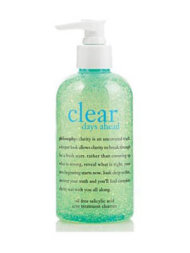
Suds Up (Photo: Courtesy of Philosophy) Since acne is caused by oil and bacteria that you need to keep from brewing into a blemish, prevention is key. On a daily basis, use an oil-free face wash that contains salicylic acid, like Philosophy Clear Days Ahead Oil-Free Salicylic Acid Acne Treatment Cleanser, $20, Yahoo! Shopping.
"Salicylic acid is anti-bacterial and helps exfoliate away dead skin cells, which can clog your pores," says Gervaise Gerstner, M.D., a dermatologist in New York City.


Olay ProUse a Facial Brush

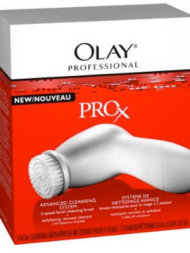
Hand-held facial brushes can also degrease skin, leaving less oil and bacteria behind, says Gerstner. The rotating brush head on this one—Olay Pro-X Advanced Cleansing System, starting at $25, Yahoo! Shopping—also helps loosen up clogged pores.


Supergoop 
Apply an Oil-Free SPF
Slather on an oil- and fragrance-free SPF, since oil can further clog pores and scented products can irritate your skin and lead to breakouts. We like Doctor T's Supergoop SPF 30+ Everyday UV Face & Body Moisturizing Sun Protection Lotion, $14, supergoop.com.


NeutrogenaReach for the Right Foundation
Pick up a foundation that's oil-free and contains salicylic acid, like Neutrogena SkinClearing Oil-Free Makeup, $10, amazon.com, to keep your base makeup from contributing to new pimples.


Medicate Correctly(Photo: Courtesy of Bremenn Research Labs )
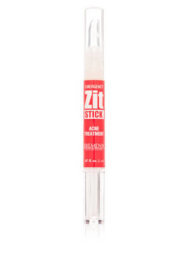
Bremenn Zit Stick When new pimples pop up, hit them with benzoyl peroxide ASAP.

The quicker you get to them with this antiseptic and anti-inflammatory ingredient, the faster the zit will vanish. "Just don't use it for more than a week at a time," says Doris Day, M.D., a dermatologist in New York City and author of 100 Questions & Answers About Acne.

Try Bremenn Research Labs Emergency Zit Stick Acne Treatment, 4 sticks for $84, amazon.com.


Cortizone-10Get the Red Out
If you're dealing with a bright red blemish, turn to a hydrocortisone cream, like Cortizone-10 Intensive Healing Formula, starting at $7, Yahoo! Shopping, which helps relieve redness and inflammation.

After you top your zit with benzoyl peroxide, apply this over top to bring down the swelling and redness, adds Day. "You can also bring down the swelling by holding an ice pack against the trouble spot," notes Gerstner, "then continue with the hydrocortisone cream."


 Top Your Zit With Toothpaste
Colgate Optic White In a pinch, top your blemish with a white opaque toothpaste, like Colgate Optic White Toothpaste, starting at $6, Yahoo! Shopping. The formula helps dry out zits by morning.


Correct Your Mistakes(Photo: Courtesy of Proactiv)
Proactiv Dark Spot CorrectorWhat's worse than acne? An acne scar.

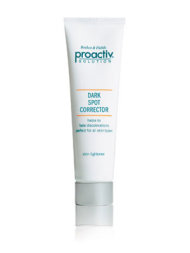
First things first: Don't pick your face when you have a pimple! It will only result in a scar that you'll later have to lighten with a bleaching agent or get zapped with a laser to remove it. We get it though. Picking happens. If the damage is already done and you have a blemish battle wound, apply a hydroquinone cream to the area to help lighten the spot, says Gerstner.

We like Proactiv Dark Spot Corrector, $22, discoverproactiv.com.

5 Foods That Can Trigger a Stroke

Foods that Trigger Stroke
Few things feel more terrifying and random than a stroke, which can strike without warning. And fear of stroke—when a blood vessel in or leading to the brain bursts or is blocked by a blood clot, starving brain cells of oxygen and nutrients—is well founded. After all, stroke is the number-three killer in the U.S., affecting more than 700,000 people each year. Here are five foods that cause the damage that leads to stroke.


1. Crackers, chips, and store-bought pastries and baked goods


Muffins, doughnuts, chips, crackers, and many other baked goods are high in trans fats, which are hydrogenated oils popular with commercial bakeries because they stay solid at room temperature, so the products don't require refrigeration. Also listed on labels as "partially hydrogenated" or hydrogenated oils, trans fats are found in all kinds of snack foods, frozen foods, and baked goods, including salad dressings, microwave popcorn, stuffing mixes, frozen tater tots and French fries, cake mixes, and whipped toppings. They're also what makes margarine stay in a solid cube. The worst offenders are fried fast foods such as onion rings, French fries, and fried chicken.
Why it's bad: For years scientists have known trans fats are dangerous artery-blockers, upping the concentrations of lipids and bad cholesterol in the blood and lowering good cholesterol. Now we can add stroke to the list of dangers. This year researchers at the University of North Carolina found that women who ate 7 grams of trans fat each day -- about the amount in two doughnuts or half a serving of French fries—had 30 percent more strokes (the ischemic type, caused by blocked blood flow to the brain) than women who ate just 1 gram a day. Another recent study, also in women, found that trans fats promoted inflammation and higher levels of C-reactive protein, which have been linked to an increased risk of diabetes, heart disease, and stroke.
What to do: Aim to limit trans fats to no more than 1 or 2 grams a day -- and preferably none. Avoid fast-food French fries and other fried menu items and study packaged food labels closely. Even better, bake your own cookies, cakes, and other snacks. When you can't, search out "health-food" alternative snacks, such as Terra brand potato chips and traditional whole grain crackers such as those made by Finn, Wasa, AkMak, Ryvita, and Lavasch.

2. Smoked and processed meats

Whether your weakness is pastrami, sausage, hot dogs, bacon, or a smoked turkey sandwich, the word from the experts is: Watch out.
Why it's bad: Smoked and processed meats are nasty contributors to stroke risk in two ways: The preserving processes leave them packed with sodium, but even worse are the preservatives used to keep processed meats from going bad. Sodium nitrate and nitrite have been shown by researchers to directly damage blood vessels, causing arteries to harden and narrow. And of course damaged, overly narrow blood vessels are exactly what you don't want if you fear stroke.
Many studies have linked processed meats to coronary artery disease (CAD); one meta-analysis in the journal Circulation calculated a 42-percent increase in coronary heart disease for those who eat one serving of processed meat a day. Stroke is not the only concern for salami fans; cancer journals have reported numerous studies in the past few years showing that consumption of cured and smoked meats is linked with increased risk of diabetes and higher incidences of numerous types of cancer, including leukemia.
What to do: If a smoked turkey or ham sandwich is your lunch of choice, try to vary your diet, switching to tuna, peanut butter, or other choices several days a week. Or cook turkey and chicken yourself and slice it thin for sandwiches.

3. Diet soda

Although replacing sugary drinks with diet soda seems like a smart solution for keeping weight down—a heart-healthy goal—it turns out diet soda is likely a major bad guy when it comes to stroke.
Why it's bad: People who drink a diet soda a day may up their stroke risk by 48 percent. A Columbia University study presented at the American Stroke Association's 2011 International Stroke Conference followed 2,500 people ages 40 and older and found that daily diet soda drinkers had 60 percent more strokes, heart attacks, and coronary artery disease than those who didn't drink diet soda. Researchers don't know exactly how diet soda ups stroke risk—and are following up with further studies—but nutritionists are cautioning anyone concerned about stroke to cut out diet soda pop.
What to do: Substitute more water for soda in your daily diet. It's the healthiest thirst-quencher by far, researchers say. If you don't like water, try lemonade, iced tea, or juice.

4. Red meat

This winter, when the respected journal Stroke published a study showing that women who consumed a large portion of red meat each day had a 42-percent higher incidence of stroke, it got nutrition experts talking. The information that red meat, with its high saturated fat content, isn't healthy for those looking to prevent heart disease and stroke wasn't exactly news. But the percentage increase (almost 50 percent!) was both startling and solid; the researchers arrived at their finding after following 35,000 Swedish women for ten years.
Why it's bad: Researchers have long known that the saturated fat in red meat raises the risk of stroke and heart disease by gradually clogging arteries with a buildup of protein plaques. Now it turns out that hemoglobin, the ingredient that gives red meat its high iron content, may pose a specific danger when it comes to stroke. Researchers are investigating whether blood becomes thicker and more viscous as a result of the consumption of so-called heme iron, specifically upping the chance of strokes.
What to do: Aim to substitute more poultry—particularly white meat—and fish, which are low in heme iron, for red meat. Also, choose the heart-healthiest sources of protein whenever you can, especially beans, legumes, nuts, tofu, and nonfat dairy.

5. Canned soup and prepared foods


Whether it's canned soup, canned spaghetti, or healthy-sounding frozen dinners, prepared foods and mixes rely on sodium to increase flavor and make processed foods taste fresher. Canned soup is cited by nutritionists as the worst offender; one can of canned chicken noodle soup contains more than 1,100 mg of sodium, while many other varieties, from clam chowder to simple tomato, have between 450 and 800 mg per serving. Compare that to the American Heart and Stroke Association's recommendation of less than1,500 mg of sodium daily and you'll see the problem. In fact, a nutritionist-led campaign, the National Salt Reduction Initiative, calls on food companies to reduce the salt content in canned soup and other products by 20 percent in the next two years.
Why it's bad: Salt, or sodium as it's called on food labels, directly affects stroke risk. In one recent study, people who consumed more than 4,000 mg of sodium daily had more than double the risk of stroke compared to those who ate 2,000 mg or less. Yet the Centers for Disease Control estimate that most Americans eat close to 3,500 mg of sodium per day. Studies show that sodium raises blood pressure, the primary causative factor for stroke. And be warned: Sodium wears many tricky disguises, which allow it to hide in all sorts of foods that we don't necessarily think of as salty. Some common, safe-sounding ingredients that really mean salt:
  • Baking soda
  • Baking powder
  • MSG (monosodium glutamate)
  • Disodium phosphate
  • Sodium alginate
What to do: Make your own homemade soups and entrees, then freeze individual serving-sized portions. Buy low-sodium varieties, but read labels carefully, since not all products marked "low sodium" live up to that promise.

Jekyll-and-Hyde 1968 Chevy Camaro will make you look more than twice

Like a good neighbor with some weird ideas...


This photo has not been manipulated. That's an actual 1968 Chevrolet Camaro turned into a Jekyll-and-Hyde car from its split badges on its front grille to the carpet in its trunk. It's the result of an exacting, months-long rebuild that created a car unlike any other. The crazy minds who created it? Four guys from State Farm insurance.
If you've ever tried to buy car insurance for a classic ride, you know it's a complicated process, and one fraught with potholes. The universe of classic cars runs from rusted rat rods not worth their value in scrap to multimillion-dollar machinery; some owners want to drive them as much as possible, others won't roll them any further than the garage door. In most cases, any insurance on a classic vehicle begins with a guess about its value, and one owner's chromed wheels and nitrous-injection system is another's crime against history.
About four years ago, State Farm insurance agents noted a growing demand for such policies. The nation's largest insurer runs a Vehicle Research Facility in Bloomington, Ill., that studies auto repair techniques, and took it upon itself to explain the nuances of classic cars to its agents. Tom Hollenstain, the research administrator for the facility, said while the group mulled building a couple of vehicles to show the difference between restored and modified, the shop manager had the brainstorm to combine everything into one vehicle, split down the middle.
The build began with the discovery of a 1968 Camaro among the thousands of totaled vehicles that pass through State Farm's hands every year. "It was one of those cars that looked good from far, but was far from good," said Hollenstain, after suffering an engine fire that blew out the windshield and melted the dash.
Working around other projects off and on for nearly 3 1/2 years, the shop slowly built its double-sided muscle car. The driver's side of the Camaro received a show-quality restoration back to factory original state -- from the seat covers to the frame rails. The passenger's side was given the kind of rebuild that often draws inspiration from whatever twelve pack's on sale at the corner liquor store -- with sloppy body filler, odd-sized wheels and massive air brakes. Even the engine gets a split treatment; one side has an aluminum head, the other cast-iron as GM intended.
In the middle, State Farm's builders carefully melded the hood, grille and paint of the original with that from a Camaro SS, and kept the line razor-sharp through the vehicle. Outside of the upholstery work, "the car was entirely built by the four staffers here," says Hollenstain.
The half-and-half Camaro will run and move, but not very well, thanks to mismatched brakes; State Farm plans to keep using it as a training tool and advertisement for its classic car policies at auto shows nationwide -- and a quiet testament to four car enthusiasts who made a statement about the world of classic cars on company time.
Photos: State Farm via Flickr

6-foot lizard on the loose in Colorado

  A 6-foot monitor lizard, similar to the one pictured here, is on the loose in Colorado. (Arvin C. Diesmos/National …It sounds more like a viral marketing campaign for the new "Spider-Man" movie. But a sheriff in Colorado Springs, Colo., has warned residents that an aggressive, 6-foot lizard is on the loose.
Teller County Sheriff Mike Ensminger described the reptile as a 25-pound Nile monitor lizard named Dino that escaped from his owner's yard, with his mesh leash still attached.
The Sheriff's Office sent out what's known as a reverse 911, in which it warned about 400 homes in the Woodland Park area that a "possibly aggressive animal" was wandering the streets.
"We have a 6-foot reptile out and about," Ensminger said. "If it gets hungry enough, we don't know what it will do."
And the sheriff sounded somewhat less than heroic in his approach to bringing Dino in. "I'm not going after it," Ensminger said. "I don't do reptiles."
Dino's owner, who asked to be identified only by his first name, Greg, told local station KKTV that the lizard is not aggressive. But he also admitted that it's not the first time Dino has escaped from his backyard confines. Greg said that about a year ago, Dino went missing for two weeks before being found about 100 feet away from his home.
Monitor lizards normally feed on smaller creatures like rodents, but local veterinarian Bradley Bundy told The Associated Press that they definitely could pose a threat to humans caught in their path.
"This kiddo could hurt someone if they don't know how to restrain it," he said.

America's best free attractions


The Freedom Trail, Boston (Photo: reynolds.james.e / Flickr)The Freedom Trail, Boston (Photo: reynolds.james.e / Flickr)

America is the land of the free—and that applies to many of the country's star attractions as well. Make the most of your summer by visiting these famous spots around the United States; you won't have to pay a penny to do it.

Tired of spending layovers in an airport?  Download Yahoo! TimeTraveler on your iPhone to create custom itineraries based on your location and amount of time you have to spend.

The Freedom Trail, Boston


Learn history, see the city, and get some exercise at the same time with a walk along Boston's Freedom Trail. This 2 1/2-mile path highlights 16 sites that are historically significant to the American Revolution, and they are all free. Visit the Freedom Trail's website to read up on the Bunker Hill Monument and the Paul Revere House, among others, and prepare yourself for a self-guided tour. Best of all, for the directionally challenged, the trail is clearly marked the whole way by a red painted line or a brick path.


(Photo: David Carillet/Shutterstock)

Great Smoky Mountains National Park,
North Carolina and Tennessee


Great Smoky Mountains National Park is one of the few major American national parks that don't charge admission (and there's actually a deed restriction on the land saying that no toll or fee will ever be imposed). The park has so much to offer. Into wildlife? Come here to spot hundreds of species, from bears to deer. Looking for a more cultural experience? Learn about the history of the southern Appalachian region. Active visitors will be endlessly entertained as well, with many options for hiking, biking, and riding.


(Photo: Lincoln Park Zoo)

Lincoln Park Zoo, Chicago

Lions, gorillas, and other wild creatures live just minutes away from downtown Chicago in Lincoln Park Zoo. The zoo is free and open every day of the year, making it an easy stop on any Chicago tour. Check the zoo's daily calendar for inspiration on what to see—you can watch sea lion training, see cows being milked at the zoo's farm, or even pet a goat. Make your visit even more fun by downloading the free SpotDash app, which will take you on a scavenger hunt throughout the zoo and the rest of the city.

(Photo: Thinkstock/Comstock)

The National Mall, Washington, D.C.

From the new Martin Luther King, Jr. National Memorial to the famous Smithsonian Castle, some of America's most iconic sights can be found on the National Mall. Everything along this open-air national park is free, from world-class museums in the Smithsonian complex to historical sites, such as the Capitol. There's even a free app you can download to help you find your way, learn facts, and create your own self-guided tours.


(Photo: Thinkstock/iStockphoto)

Golden Gate Bridge, San Francisco

This year marks the 75th anniversary of the Golden Gate Bridge, so why not celebrate with a visit? Don't spend money on a tour; instead, download a free app (available for iPhone and Android) and learn behind-the-scenes trivia, get expert advice, and even listen to recordings of bridge workers' oral history. Walk or bike across the bridge and take in the fabulous views of San Francisco. Begin or end your visit with a stop in Golden Gate National Recreation Area, which can be accessed on either end of the bridge.


(Photo: trekandshoot/Shutterstock)

Independence National Historical Park,
Philadelphia

See America's second birthplace, Philadelphia's Independence National Historical Park. Although Washington is the nation's capital, Philadelphia was the home of Congress and the Supreme Court for 10 years while the District was being built. Explore the remnants of that history at this large national park, where you can view the Liberty Bell, tour Old City Hall, or just enjoy the public green spaces. Everything is free except for the National Constitution Center. You will need tickets for tours of Independence Hall, but they won't cost a thing.


The Getty Center, Los Angeles

The Getty Center, one of Los Angeles' best art museums, is free. Permanent exhibitions feature important pieces like Vincent Van Gogh's Irises and Claude Monet's Sunrise (Marine), and there are always rotating exhibitions like Portraits of Renown: Photography and the Cult of Celebrity, which runs through Aug. 26. Be sure to leave time to visit the recently reopened Central Garden in the heart the museum, where you can see a waterfall, specialty gardens, and more than 500 different varieties of plants. The Getty is closed on Mondays, so plan your visit for any other day.


(Photo: Jean-Paul Gisclair/NewOrleansOnline.com)

Jackson Square, New Orleans

Experience the real feel of New Orleans in Jackson Square. This public space houses an open-air artist colony where you can browse or buy work by local artists (or even just watch them create). Here, you'll find one of New Orleans' most recognizable landmarks, the St. Louis Cathedral, which is also free to enter, as well as the statue of Andrew Jackson, after whom the park is named.


International Rose Test Garden, Portland, Ore.

Make time to stop and smell the roses—all 10,000 of them—at Portland's International Rose Test Garden. This 4 1/2-acre garden features new varieties of roses, beautifully maintained landscaping, and the Shakespeare Garden, which includes herbs, trees, and flowers mentioned in The Bard's works. The rose garden has been in use since 1917, and it even harbored hybrids from Europe for safekeeping during World War I. The best time to visit is June through October, when the roses are in bloom, but the grounds are open year-round. It's free to look in the garden, but don't touch—you'll face a $500 fine if you try to take any roses home with you.


(Photo: Jenny Rotner/NYCGo)

Central Park, New York City

A green oasis in the middle of bustling Manhattan, Central Park offers open spaces, beautiful views, and peace and quiet. Tour the 55 monuments, memorials, and sculptures, watch a game at one of its 26 ball fields, or hike 130 acres of woodlands. If you have kids, let them run wild on the park's 21 playgrounds, or do some running yourself on the park's many paths. Bring your own bicycle and go for a ride, or simply take a stroll around the Jacqueline Kennedy Onassis Reservoir. Pack a picnic, a blanket, and a Frisbee, and you can entertain yourself all day for free.

Does New Tree Ring Study Put the Chill on Global Warming?

The density and width of tree rings shows how warm it was during each year's growing season, and thereby serves as a record of long-term climate trends.A new analysis of 2,000 years of tree ring data has quickly made climate change deniers' list of greatest hits to the theory of manmade global warming.
The tree rings "prove [the] climate was WARMER in Roman and Medieval times than it is now," the British newspaper the Daily Mail reported last week, "and [the] world has been cooling for 2,000 years."
That and other articles suggest the current global warming trend is a mere blip when viewed in the context of natural temperature oscillations etched into tree rings over the past two millennia. The Star-Ledger, a New Jersey newspaper, mused that the findings lock in "one piece of an extremely complex puzzle that has been oversimplified by the Al Gores of the world."
[Related: Heat wave blisters, from Maine to Michigan]
However, the study actually does none of the above. "Our study doesn't go against anthropogenic global warming in any way," said Robert Wilson, a paleoclimatologist at the University of St. Andrews in Scotland and a co-author of the study, which appeared July 8 in the journal Nature Climate Change. The tree rings do help fill in a piece of Earth's complicated climate puzzle, he said. However, it is climate change deniers who seem to have misconstrued the bigger picture. [Incompetent People Too Ignorant to Know It]
So, what exactly did the study find? Instead of using the width of trees' rings as a gauge of annual temperatures, as most past analyses of tree rings have done, Wilson and his fellow researchers tracked the density of northern Scandinavian trees' rings marking each year back to 138 B.C. They showed that density measurements give a slightly different reading of historic temperature fluctuations than ring width measurements, and according to their way of reckoning, the Roman and medieval warm periods reached higher temperatures than previously estimated.
That's significant because "if we can improve our estimates for the medieval period, then that will help us understanding the dynamics in this climate system, and help us understand the current warming," Wilson told Life's Little Mysteries.
[Related: Extreme weather convinces climate change doubters]
But it's old news that Northern Europe experienced a natural warm period 2,000 years ago and during the 11th century. Not much is known about the Roman period, but the medieval warm spell primarily resulted from a decrease in volcanic activity, Wilson said. Volcanic ash in the atmosphere tends to block the sun, decreasing Earth's surface temperature.
The current warming, on the other hand, has nothing to do with volcanoes. "None of this changes the fact that the current warming can't be modeled based on natural forces alone," he said. "Anthropogenic [greenhouse gas] emissions are the predominant forces in the late 20th century and early 21st century period."
That Scandinavia may have been slightly warmer in the 11th century than today also doesn't change the fact that the world, as a whole, is warmer now. "This data is spatially specific. You would expect to see this trend in northern Scandinavia, but not in the Alps," Wilson said. "Almost all models show that the current global warming is probably warmer overall than that warming."
[Slideshow: U.S. sweltering in heat wave]
Finally, according to Gavin Schmidt, a NASA climate scientist, the tree rings show what mounds of other data have shown as well: For the past few millennia, Earth's northern latitudes had been cooling down overall. "Similarly, we expect that over the same period the tropics should have warmed slightly," Schmidt said in an email. These trends resulted from shifts in the Earth's orbit on thousand-year-long time-scales.
But Wilson, Schmidt and the vast majority of climate scientists agree: human-caused warming of the entire globe now overwhelms those subtle, regional heat redistributions. World temperatures are now pushing in only one direction: up.