Wednesday, July 18, 2012

Camouflaged Residence Discovered in California Park


An elaborate and illegal camouflaged residence, outfitted with bunk beds and a barbecue patio, has been discovered near a Los Angeles County animal refuge.
Camouflaged home found in California park
Eight months ago, Robert Downs, 51, set up a small structure in the woods near the Tujunga Ponds Wildlife Sanctuary in Sunland, Calif. To hide his home from police, Downs, who was previously homeless, sprayed it with camouflage paint and cut down nearby trees, said Johnie Jones, a deputy in the Parks Bureau of the Los Angeles County Sheriff's Department.
The structure, which Downs built with materials he bought at Home Depot, contained four bunk beds built into the walls, tables, shelves and fire extinguishers. Outside were a rock patio, a barbecue grill and more tables. An American flag was draped over Downs' bed.
Downs stood a chance of evading major legal trouble for his hidden house, but sheriff's deputies also discovered that he cultivated eight marijuana plants outside the structure, a felony because he did not have a permit to do so, Jones said.
When Los Angeles County Sheriff's Department deputies found Downs's residence while on patrol Monday, he told them he had been living in the 13.5-acre wildlife sanctuary for more than a year, Jones said.
"He seems like he had some skills," Jones said. "I've seen homeless sweeps before where people have brought tents or mattresses, but nothing this elaborate."
Downs was arrested on charges of marijuana cultivation and building a house on county property, Jones said. He is being held on a $30,000 bond, Jones said.
Downs was found with two others who were cited with infractions and then released, Jones said.
The Los Angeles County Department of Public Works will remove the structure from the park over the next two weeks.

Beyoncé’s Newest Look: Long Box Braids!

A new mom deserves a new look, and Beyoncé stepped out with an entirely new hairdo this week! The singer, who has favored long flowy hair for over a decade, was spotted Wednesday morning with long box braids wrapped up in a massive bun.
It's been long time since she's looked like this (she briefly had braids in 1999 while in Destiny's Child).
[Related: Slim Beyonce Wears Sexy Cowgirl Outfit for First Post-Baby Concert]
The decision may have been inspired by Beyoncé's style-savvy younger sister Solange, who currently has braids almost to her knees!
Out and about with her baby Blue Ivy in NYC, Beyoncé looked great in minimal makeup, simple hoop earrings and colorful ikat jumper, appearing more down-to-earth than her usual super glam self. And since the hair is a throwback to the 90s, she looks younger too!
[Related: Jay-Z Foresees Himself Spoiling Daughter Blue Ivy]
Certainly with the responsibility of a new baby, Beyoncé must not have as much time to do her hair. So the braids are a fun, easier way to manage a look for the new mom.

What do you think of Beyoncé's braids? Leave your comments below!

8 Ways To Get Rid of Acne


Anytime a pimple pops up out of nowhere it totally ruins your day—especially if it's right before a big date. Want clear skin 24/7? We do, too! We asked two top dermatologists to weigh in on how to keep your complexion looking its best 365 days a year.


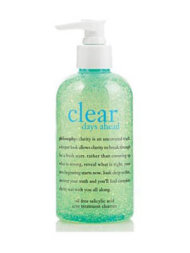
Suds Up (Photo: Courtesy of Philosophy) Since acne is caused by oil and bacteria that you need to keep from brewing into a blemish, prevention is key. On a daily basis, use an oil-free face wash that contains salicylic acid, like Philosophy Clear Days Ahead Oil-Free Salicylic Acid Acne Treatment Cleanser, $20, Yahoo! Shopping.
"Salicylic acid is anti-bacterial and helps exfoliate away dead skin cells, which can clog your pores," says Gervaise Gerstner, M.D., a dermatologist in New York City.


Olay ProUse a Facial Brush

Hand-held facial brushes can also degrease skin, leaving less oil and bacteria behind, says Gerstner. The rotating brush head on this one—Olay Pro-X Advanced Cleansing System, starting at $25, Yahoo! Shopping—also helps loosen up clogged pores.


Supergoop 
Apply an Oil-Free SPF
Slather on an oil- and fragrance-free SPF, since oil can further clog pores and scented products can irritate your skin and lead to breakouts. We like Doctor T's Supergoop SPF 30+ Everyday UV Face & Body Moisturizing Sun Protection Lotion, $14, supergoop.com.


NeutrogenaReach for the Right Foundation
Pick up a foundation that's oil-free and contains salicylic acid, like Neutrogena SkinClearing Oil-Free Makeup, $10, amazon.com, to keep your base makeup from contributing to new pimples.


Medicate Correctly(Photo: Courtesy of Bremenn Research Labs )
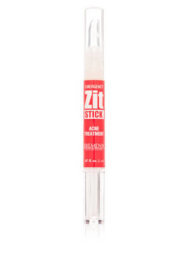
Bremenn Zit Stick When new pimples pop up, hit them with benzoyl peroxide ASAP.

The quicker you get to them with this antiseptic and anti-inflammatory ingredient, the faster the zit will vanish. "Just don't use it for more than a week at a time," says Doris Day, M.D., a dermatologist in New York City and author of 100 Questions & Answers About Acne.

Try Bremenn Research Labs Emergency Zit Stick Acne Treatment, 4 sticks for $84, amazon.com.


Cortizone-10Get the Red Out
If you're dealing with a bright red blemish, turn to a hydrocortisone cream, like Cortizone-10 Intensive Healing Formula, starting at $7, Yahoo! Shopping, which helps relieve redness and inflammation.

After you top your zit with benzoyl peroxide, apply this over top to bring down the swelling and redness, adds Day. "You can also bring down the swelling by holding an ice pack against the trouble spot," notes Gerstner, "then continue with the hydrocortisone cream."


 Top Your Zit With Toothpaste
Colgate Optic White In a pinch, top your blemish with a white opaque toothpaste, like Colgate Optic White Toothpaste, starting at $6, Yahoo! Shopping. The formula helps dry out zits by morning.


Correct Your Mistakes(Photo: Courtesy of Proactiv)
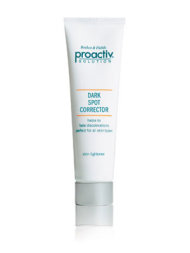
Proactiv Dark Spot CorrectorWhat's worse than acne? An acne scar.

First things first: Don't pick your face when you have a pimple! It will only result in a scar that you'll later have to lighten with a bleaching agent or get zapped with a laser to remove it. We get it though. Picking happens. If the damage is already done and you have a blemish battle wound, apply a hydroquinone cream to the area to help lighten the spot, says Gerstner.

We like Proactiv Dark Spot Corrector, $22, discoverproactiv.com.

5 Foods That Can Trigger a Stroke

Foods that Trigger Stroke
Few things feel more terrifying and random than a stroke, which can strike without warning. And fear of stroke—when a blood vessel in or leading to the brain bursts or is blocked by a blood clot, starving brain cells of oxygen and nutrients—is well founded. After all, stroke is the number-three killer in the U.S., affecting more than 700,000 people each year. Here are five foods that cause the damage that leads to stroke.


1. Crackers, chips, and store-bought pastries and baked goods


Muffins, doughnuts, chips, crackers, and many other baked goods are high in trans fats, which are hydrogenated oils popular with commercial bakeries because they stay solid at room temperature, so the products don't require refrigeration. Also listed on labels as "partially hydrogenated" or hydrogenated oils, trans fats are found in all kinds of snack foods, frozen foods, and baked goods, including salad dressings, microwave popcorn, stuffing mixes, frozen tater tots and French fries, cake mixes, and whipped toppings. They're also what makes margarine stay in a solid cube. The worst offenders are fried fast foods such as onion rings, French fries, and fried chicken.
Why it's bad: For years scientists have known trans fats are dangerous artery-blockers, upping the concentrations of lipids and bad cholesterol in the blood and lowering good cholesterol. Now we can add stroke to the list of dangers. This year researchers at the University of North Carolina found that women who ate 7 grams of trans fat each day -- about the amount in two doughnuts or half a serving of French fries—had 30 percent more strokes (the ischemic type, caused by blocked blood flow to the brain) than women who ate just 1 gram a day. Another recent study, also in women, found that trans fats promoted inflammation and higher levels of C-reactive protein, which have been linked to an increased risk of diabetes, heart disease, and stroke.
What to do: Aim to limit trans fats to no more than 1 or 2 grams a day -- and preferably none. Avoid fast-food French fries and other fried menu items and study packaged food labels closely. Even better, bake your own cookies, cakes, and other snacks. When you can't, search out "health-food" alternative snacks, such as Terra brand potato chips and traditional whole grain crackers such as those made by Finn, Wasa, AkMak, Ryvita, and Lavasch.

2. Smoked and processed meats

Whether your weakness is pastrami, sausage, hot dogs, bacon, or a smoked turkey sandwich, the word from the experts is: Watch out.
Why it's bad: Smoked and processed meats are nasty contributors to stroke risk in two ways: The preserving processes leave them packed with sodium, but even worse are the preservatives used to keep processed meats from going bad. Sodium nitrate and nitrite have been shown by researchers to directly damage blood vessels, causing arteries to harden and narrow. And of course damaged, overly narrow blood vessels are exactly what you don't want if you fear stroke.
Many studies have linked processed meats to coronary artery disease (CAD); one meta-analysis in the journal Circulation calculated a 42-percent increase in coronary heart disease for those who eat one serving of processed meat a day. Stroke is not the only concern for salami fans; cancer journals have reported numerous studies in the past few years showing that consumption of cured and smoked meats is linked with increased risk of diabetes and higher incidences of numerous types of cancer, including leukemia.
What to do: If a smoked turkey or ham sandwich is your lunch of choice, try to vary your diet, switching to tuna, peanut butter, or other choices several days a week. Or cook turkey and chicken yourself and slice it thin for sandwiches.

3. Diet soda

Although replacing sugary drinks with diet soda seems like a smart solution for keeping weight down—a heart-healthy goal—it turns out diet soda is likely a major bad guy when it comes to stroke.
Why it's bad: People who drink a diet soda a day may up their stroke risk by 48 percent. A Columbia University study presented at the American Stroke Association's 2011 International Stroke Conference followed 2,500 people ages 40 and older and found that daily diet soda drinkers had 60 percent more strokes, heart attacks, and coronary artery disease than those who didn't drink diet soda. Researchers don't know exactly how diet soda ups stroke risk—and are following up with further studies—but nutritionists are cautioning anyone concerned about stroke to cut out diet soda pop.
What to do: Substitute more water for soda in your daily diet. It's the healthiest thirst-quencher by far, researchers say. If you don't like water, try lemonade, iced tea, or juice.

4. Red meat

This winter, when the respected journal Stroke published a study showing that women who consumed a large portion of red meat each day had a 42-percent higher incidence of stroke, it got nutrition experts talking. The information that red meat, with its high saturated fat content, isn't healthy for those looking to prevent heart disease and stroke wasn't exactly news. But the percentage increase (almost 50 percent!) was both startling and solid; the researchers arrived at their finding after following 35,000 Swedish women for ten years.
Why it's bad: Researchers have long known that the saturated fat in red meat raises the risk of stroke and heart disease by gradually clogging arteries with a buildup of protein plaques. Now it turns out that hemoglobin, the ingredient that gives red meat its high iron content, may pose a specific danger when it comes to stroke. Researchers are investigating whether blood becomes thicker and more viscous as a result of the consumption of so-called heme iron, specifically upping the chance of strokes.
What to do: Aim to substitute more poultry—particularly white meat—and fish, which are low in heme iron, for red meat. Also, choose the heart-healthiest sources of protein whenever you can, especially beans, legumes, nuts, tofu, and nonfat dairy.

5. Canned soup and prepared foods


Whether it's canned soup, canned spaghetti, or healthy-sounding frozen dinners, prepared foods and mixes rely on sodium to increase flavor and make processed foods taste fresher. Canned soup is cited by nutritionists as the worst offender; one can of canned chicken noodle soup contains more than 1,100 mg of sodium, while many other varieties, from clam chowder to simple tomato, have between 450 and 800 mg per serving. Compare that to the American Heart and Stroke Association's recommendation of less than1,500 mg of sodium daily and you'll see the problem. In fact, a nutritionist-led campaign, the National Salt Reduction Initiative, calls on food companies to reduce the salt content in canned soup and other products by 20 percent in the next two years.
Why it's bad: Salt, or sodium as it's called on food labels, directly affects stroke risk. In one recent study, people who consumed more than 4,000 mg of sodium daily had more than double the risk of stroke compared to those who ate 2,000 mg or less. Yet the Centers for Disease Control estimate that most Americans eat close to 3,500 mg of sodium per day. Studies show that sodium raises blood pressure, the primary causative factor for stroke. And be warned: Sodium wears many tricky disguises, which allow it to hide in all sorts of foods that we don't necessarily think of as salty. Some common, safe-sounding ingredients that really mean salt:
  • Baking soda
  • Baking powder
  • MSG (monosodium glutamate)
  • Disodium phosphate
  • Sodium alginate
What to do: Make your own homemade soups and entrees, then freeze individual serving-sized portions. Buy low-sodium varieties, but read labels carefully, since not all products marked "low sodium" live up to that promise.

Jekyll-and-Hyde 1968 Chevy Camaro will make you look more than twice

Like a good neighbor with some weird ideas...


This photo has not been manipulated. That's an actual 1968 Chevrolet Camaro turned into a Jekyll-and-Hyde car from its split badges on its front grille to the carpet in its trunk. It's the result of an exacting, months-long rebuild that created a car unlike any other. The crazy minds who created it? Four guys from State Farm insurance.
If you've ever tried to buy car insurance for a classic ride, you know it's a complicated process, and one fraught with potholes. The universe of classic cars runs from rusted rat rods not worth their value in scrap to multimillion-dollar machinery; some owners want to drive them as much as possible, others won't roll them any further than the garage door. In most cases, any insurance on a classic vehicle begins with a guess about its value, and one owner's chromed wheels and nitrous-injection system is another's crime against history.
About four years ago, State Farm insurance agents noted a growing demand for such policies. The nation's largest insurer runs a Vehicle Research Facility in Bloomington, Ill., that studies auto repair techniques, and took it upon itself to explain the nuances of classic cars to its agents. Tom Hollenstain, the research administrator for the facility, said while the group mulled building a couple of vehicles to show the difference between restored and modified, the shop manager had the brainstorm to combine everything into one vehicle, split down the middle.
The build began with the discovery of a 1968 Camaro among the thousands of totaled vehicles that pass through State Farm's hands every year. "It was one of those cars that looked good from far, but was far from good," said Hollenstain, after suffering an engine fire that blew out the windshield and melted the dash.
Working around other projects off and on for nearly 3 1/2 years, the shop slowly built its double-sided muscle car. The driver's side of the Camaro received a show-quality restoration back to factory original state -- from the seat covers to the frame rails. The passenger's side was given the kind of rebuild that often draws inspiration from whatever twelve pack's on sale at the corner liquor store -- with sloppy body filler, odd-sized wheels and massive air brakes. Even the engine gets a split treatment; one side has an aluminum head, the other cast-iron as GM intended.
In the middle, State Farm's builders carefully melded the hood, grille and paint of the original with that from a Camaro SS, and kept the line razor-sharp through the vehicle. Outside of the upholstery work, "the car was entirely built by the four staffers here," says Hollenstain.
The half-and-half Camaro will run and move, but not very well, thanks to mismatched brakes; State Farm plans to keep using it as a training tool and advertisement for its classic car policies at auto shows nationwide -- and a quiet testament to four car enthusiasts who made a statement about the world of classic cars on company time.
Photos: State Farm via Flickr

6-foot lizard on the loose in Colorado

  A 6-foot monitor lizard, similar to the one pictured here, is on the loose in Colorado. (Arvin C. Diesmos/National …It sounds more like a viral marketing campaign for the new "Spider-Man" movie. But a sheriff in Colorado Springs, Colo., has warned residents that an aggressive, 6-foot lizard is on the loose.

Teller County Sheriff Mike Ensminger described the reptile as a 25-pound Nile monitor lizard named Dino that escaped from his owner's yard, with his mesh leash still attached.
The Sheriff's Office sent out what's known as a reverse 911, in which it warned about 400 homes in the Woodland Park area that a "possibly aggressive animal" was wandering the streets.
"We have a 6-foot reptile out and about," Ensminger said. "If it gets hungry enough, we don't know what it will do."
And the sheriff sounded somewhat less than heroic in his approach to bringing Dino in. "I'm not going after it," Ensminger said. "I don't do reptiles."
Dino's owner, who asked to be identified only by his first name, Greg, told local station KKTV that the lizard is not aggressive. But he also admitted that it's not the first time Dino has escaped from his backyard confines. Greg said that about a year ago, Dino went missing for two weeks before being found about 100 feet away from his home.
Monitor lizards normally feed on smaller creatures like rodents, but local veterinarian Bradley Bundy told The Associated Press that they definitely could pose a threat to humans caught in their path.
"This kiddo could hurt someone if they don't know how to restrain it," he said.

America's best free attractions


The Freedom Trail, Boston (Photo: reynolds.james.e / Flickr)The Freedom Trail, Boston (Photo: reynolds.james.e / Flickr)

America is the land of the free—and that applies to many of the country's star attractions as well. Make the most of your summer by visiting these famous spots around the United States; you won't have to pay a penny to do it.

Tired of spending layovers in an airport?  Download Yahoo! TimeTraveler on your iPhone to create custom itineraries based on your location and amount of time you have to spend.

The Freedom Trail, Boston


Learn history, see the city, and get some exercise at the same time with a walk along Boston's Freedom Trail. This 2 1/2-mile path highlights 16 sites that are historically significant to the American Revolution, and they are all free. Visit the Freedom Trail's website to read up on the Bunker Hill Monument and the Paul Revere House, among others, and prepare yourself for a self-guided tour. Best of all, for the directionally challenged, the trail is clearly marked the whole way by a red painted line or a brick path.


(Photo: David Carillet/Shutterstock)

Great Smoky Mountains National Park,
North Carolina and Tennessee


Great Smoky Mountains National Park is one of the few major American national parks that don't charge admission (and there's actually a deed restriction on the land saying that no toll or fee will ever be imposed). The park has so much to offer. Into wildlife? Come here to spot hundreds of species, from bears to deer. Looking for a more cultural experience? Learn about the history of the southern Appalachian region. Active visitors will be endlessly entertained as well, with many options for hiking, biking, and riding.


(Photo: Lincoln Park Zoo)

Lincoln Park Zoo, Chicago

Lions, gorillas, and other wild creatures live just minutes away from downtown Chicago in Lincoln Park Zoo. The zoo is free and open every day of the year, making it an easy stop on any Chicago tour. Check the zoo's daily calendar for inspiration on what to see—you can watch sea lion training, see cows being milked at the zoo's farm, or even pet a goat. Make your visit even more fun by downloading the free SpotDash app, which will take you on a scavenger hunt throughout the zoo and the rest of the city.

(Photo: Thinkstock/Comstock)

The National Mall, Washington, D.C.

From the new Martin Luther King, Jr. National Memorial to the famous Smithsonian Castle, some of America's most iconic sights can be found on the National Mall. Everything along this open-air national park is free, from world-class museums in the Smithsonian complex to historical sites, such as the Capitol. There's even a free app you can download to help you find your way, learn facts, and create your own self-guided tours.


(Photo: Thinkstock/iStockphoto)

Golden Gate Bridge, San Francisco

This year marks the 75th anniversary of the Golden Gate Bridge, so why not celebrate with a visit? Don't spend money on a tour; instead, download a free app (available for iPhone and Android) and learn behind-the-scenes trivia, get expert advice, and even listen to recordings of bridge workers' oral history. Walk or bike across the bridge and take in the fabulous views of San Francisco. Begin or end your visit with a stop in Golden Gate National Recreation Area, which can be accessed on either end of the bridge.


(Photo: trekandshoot/Shutterstock)

Independence National Historical Park,
Philadelphia

See America's second birthplace, Philadelphia's Independence National Historical Park. Although Washington is the nation's capital, Philadelphia was the home of Congress and the Supreme Court for 10 years while the District was being built. Explore the remnants of that history at this large national park, where you can view the Liberty Bell, tour Old City Hall, or just enjoy the public green spaces. Everything is free except for the National Constitution Center. You will need tickets for tours of Independence Hall, but they won't cost a thing.


The Getty Center, Los Angeles

The Getty Center, one of Los Angeles' best art museums, is free. Permanent exhibitions feature important pieces like Vincent Van Gogh's Irises and Claude Monet's Sunrise (Marine), and there are always rotating exhibitions like Portraits of Renown: Photography and the Cult of Celebrity, which runs through Aug. 26. Be sure to leave time to visit the recently reopened Central Garden in the heart the museum, where you can see a waterfall, specialty gardens, and more than 500 different varieties of plants. The Getty is closed on Mondays, so plan your visit for any other day.


(Photo: Jean-Paul Gisclair/NewOrleansOnline.com)

Jackson Square, New Orleans

Experience the real feel of New Orleans in Jackson Square. This public space houses an open-air artist colony where you can browse or buy work by local artists (or even just watch them create). Here, you'll find one of New Orleans' most recognizable landmarks, the St. Louis Cathedral, which is also free to enter, as well as the statue of Andrew Jackson, after whom the park is named.


International Rose Test Garden, Portland, Ore.

Make time to stop and smell the roses—all 10,000 of them—at Portland's International Rose Test Garden. This 4 1/2-acre garden features new varieties of roses, beautifully maintained landscaping, and the Shakespeare Garden, which includes herbs, trees, and flowers mentioned in The Bard's works. The rose garden has been in use since 1917, and it even harbored hybrids from Europe for safekeeping during World War I. The best time to visit is June through October, when the roses are in bloom, but the grounds are open year-round. It's free to look in the garden, but don't touch—you'll face a $500 fine if you try to take any roses home with you.


(Photo: Jenny Rotner/NYCGo)

Central Park, New York City

A green oasis in the middle of bustling Manhattan, Central Park offers open spaces, beautiful views, and peace and quiet. Tour the 55 monuments, memorials, and sculptures, watch a game at one of its 26 ball fields, or hike 130 acres of woodlands. If you have kids, let them run wild on the park's 21 playgrounds, or do some running yourself on the park's many paths. Bring your own bicycle and go for a ride, or simply take a stroll around the Jacqueline Kennedy Onassis Reservoir. Pack a picnic, a blanket, and a Frisbee, and you can entertain yourself all day for free.

Does New Tree Ring Study Put the Chill on Global Warming?

The density and width of tree rings shows how warm it was during each year's growing season, and thereby serves as a record of long-term climate trends.A new analysis of 2,000 years of tree ring data has quickly made climate change deniers' list of greatest hits to the theory of manmade global warming.
The tree rings "prove [the] climate was WARMER in Roman and Medieval times than it is now," the British newspaper the Daily Mail reported last week, "and [the] world has been cooling for 2,000 years."
That and other articles suggest the current global warming trend is a mere blip when viewed in the context of natural temperature oscillations etched into tree rings over the past two millennia. The Star-Ledger, a New Jersey newspaper, mused that the findings lock in "one piece of an extremely complex puzzle that has been oversimplified by the Al Gores of the world."
[Related: Heat wave blisters, from Maine to Michigan]
However, the study actually does none of the above. "Our study doesn't go against anthropogenic global warming in any way," said Robert Wilson, a paleoclimatologist at the University of St. Andrews in Scotland and a co-author of the study, which appeared July 8 in the journal Nature Climate Change. The tree rings do help fill in a piece of Earth's complicated climate puzzle, he said. However, it is climate change deniers who seem to have misconstrued the bigger picture. [Incompetent People Too Ignorant to Know It]
So, what exactly did the study find? Instead of using the width of trees' rings as a gauge of annual temperatures, as most past analyses of tree rings have done, Wilson and his fellow researchers tracked the density of northern Scandinavian trees' rings marking each year back to 138 B.C. They showed that density measurements give a slightly different reading of historic temperature fluctuations than ring width measurements, and according to their way of reckoning, the Roman and medieval warm periods reached higher temperatures than previously estimated.
That's significant because "if we can improve our estimates for the medieval period, then that will help us understanding the dynamics in this climate system, and help us understand the current warming," Wilson told Life's Little Mysteries.
[Related: Extreme weather convinces climate change doubters]
But it's old news that Northern Europe experienced a natural warm period 2,000 years ago and during the 11th century. Not much is known about the Roman period, but the medieval warm spell primarily resulted from a decrease in volcanic activity, Wilson said. Volcanic ash in the atmosphere tends to block the sun, decreasing Earth's surface temperature.
The current warming, on the other hand, has nothing to do with volcanoes. "None of this changes the fact that the current warming can't be modeled based on natural forces alone," he said. "Anthropogenic [greenhouse gas] emissions are the predominant forces in the late 20th century and early 21st century period."
That Scandinavia may have been slightly warmer in the 11th century than today also doesn't change the fact that the world, as a whole, is warmer now. "This data is spatially specific. You would expect to see this trend in northern Scandinavia, but not in the Alps," Wilson said. "Almost all models show that the current global warming is probably warmer overall than that warming."
[Slideshow: U.S. sweltering in heat wave]
Finally, according to Gavin Schmidt, a NASA climate scientist, the tree rings show what mounds of other data have shown as well: For the past few millennia, Earth's northern latitudes had been cooling down overall. "Similarly, we expect that over the same period the tropics should have warmed slightly," Schmidt said in an email. These trends resulted from shifts in the Earth's orbit on thousand-year-long time-scales.
But Wilson, Schmidt and the vast majority of climate scientists agree: human-caused warming of the entire globe now overwhelms those subtle, regional heat redistributions. World temperatures are now pushing in only one direction: up.

'Sadistic' Nazi War Criminal Laszlo Csatary, 97, Lived Openly in Budapest

One of World War II's most sadistic Nazis lived openly in Budapest in recent years, but has apparently slipped into hiding as an international manhunt closed in on him.
Laszlo Csatary, now 97, has been convicted in absentia and sentenced to death for his role in sending nearly 16,000 Jews to their deaths.
"He was particularly sadistic," said Peter Feldmajer, the president of the Jewish community in Hungary. "He created a camp for torturing the rich so they would confess where they have hidden the money."
Laszlo Karsai, Hungary's top holocaust historian whose grandmother died in Auschwitz, said Csatary was "very sadistic."
'Sadistic' Nazi War Criminal Laszlo Csatary, 97, Lived Openly in Budapest (ABC News)"There are two testimonies of German officers in Kosice who had to stop him from torturing Jewish women. He made women dig holes in the ground with their bare hands," Karsai told ABC News.
"But what do you do with a 97-year-old man who was very, very sadistic 68 years ago?" Karsai asked.
To his neighbors in Budapest, Csatary was "quiet, nice, old man." But Ladislaus Czizsik-Csatary was placed at the top the Simone Wiesenthal Center list of most wanted war crime suspects.
Csatary was not in hiding. He had lived in Budapest under his real name in at least two addresses for many years. His car is still parked in a garage on the posh Jagello Street. But when police visited his homes this week, he was not found, according to press reports.
The Wiesenthal Center, which specializes in tracking down Nazi era war criminals, has told the Hungarian prosecutors that they believe it is the same man who was a police chief in 1944 of the ghetto in the Slovakian city of Kosice, then part of Hungary. He played a "key role" in the deportation of 300 Jews to Kamyanets-Podilsky in Ukraine where they were killed and is also helped organize the deportation of15,700 Jews to the concentration camp in Auschwitz, Poland.
Karsai concedes that Csatary was unusually sadistic, but disagrees with the Wiesenthal Center that he was a prominent Nazi, although he does feel Csatary should face justice for his crimes in Hungary.
Csatary has been convicted in absentia and sentenced to death for war crimes in Czechoslovakia in 1948.
He arrived in Nova Scotia as a refugee under the false name, became a Canadian citizen in 1955 and worked as an art dealer in Montreal. In 1995 the authorities discovered his real name and revoked his citizenship. Before fleeing Canada, he admitted to Canadian investigators of his participation in the deportation of the Jews, but claimed that his role was "limited."
Pressure is now mounting on Hungarian prosecutors to take action. In a statement issued on Monday, the prosecution said that investigating was complex because the crimes were committed long ago and in another country.
"It took place 68 years ago in the region that is under the jurisdiction of another country—which also raises several investigative and legal problems," the statement said.
Last year, a Hungarian court acquitted another of the Wiesenthal Center's most-wanted, Sandor Kepiro, who was accused of helping organize the mass murder of about 3,000 civilians in the Serbian city of Novi Sad in 1942. Prosecutors appealed the verdict, but Kepiro died in the meantime.
The case comes at a sensitive time for Hungary, which has seen a rise in anti-Semitism in recent months with official attempts to it play down.

Next iPhone Has Thinner Screen

Apple's next iPhone will boast a thinner screen.


HONG KONG—Apple Inc.'s (AAPL) next iPhone, currently being manufactured by Asian component makers, will use a new technology that makes the smartphone's screen thinner, people familiar with the matter said, as the U.S. technology giant strives to improve technological features amid intensifying competition from Samsung Electronics Co. (005930.SE) and other rivals.

Japanese liquid-crystal-display makers Sharp Corp. and Japan Display Inc.—a new company that combined three Japanese electronics makers' display units—as well as South Korea's LG Display Co. (LPL) are currently mass producing panels for the next iPhone using so-called in-cell technology, the people said.

[More from WSJ.com: 8mm Camera? Nope, Just an iPhone]

The technology integrates touch sensors into the LCD, making it unnecessary to have a separate touch-screen layer. The absence of the layer, usually about half a millimeter thick, not only makes the whole screen thinner, but the quality of displayed images would improve, said DisplaySearch analyst Hiroshi Hayase.

The current iPhone 4S is 9.3 millimeters thick, according to Apple's official web site.

For Apple, the new technology would also simplify the supply chain and help cut costs as it would no longer have to buy touch panels and LCD panels from separate suppliers.

Technological progress at LCD makers such as Sharp, Japan Display and LG Display is crucial for Apple, given that Samsung has been pushing its organic light-emitting displays as one of the unique features of its Galaxy phones. Samsung's flagship smartphone, the Galaxy S III, comes with a 4.8-inch OLED screen and is thinner than the current iPhone.

[More from WSJ.com: Microsoft Hits Back as Google Muscles In]

The vast majority of OLED screens used in mobile devices today are supplied by Samsung. OLED screens, which don't require backlighting, tend to be thinner than conventional LCD panels.

While Apple and Samsung together dominate the lucrative market for high-end smartphones, the companies are under constant pressure to meet high expectations for more-powerful, capable devices that are easier to carry.

A thinner screen in the next iPhone could make the whole device slimmer, or make extra room available for other components such as batteries. But in-cell touch screens are harder to manufacture than conventional LCD screens. The people familiar with the situation said that LCD makers are finding the manufacturing process challenging and time-consuming as they scramble to achieve high yield rates.

Analysts have said that the new iPhone is expected sometime in the fall.

In May, people familiar with the matter said that the new iPhone will likely come with a screen larger than the current iPhone's 3.5-inch display. A thinner screen could help offset an increase in weight due to the larger size.

[More from WSJ.com: Tax Break Nears End For Online Shoppers]

The LCD industry has been working on the in-cell touch technology for several years. For LCD panel makers like Sharp, Japan Display and LG Display, Apple's iPhone provides the environment where they can demonstrate their latest technological progress to show that LCD screens can continue to evolve and stay competitive against OLED displays. In the meantime, Sharp, Japan Display and LG Display have also been developing OLED displays.

At the same time, the adoption of in-cell technology is bad news for makers of conventional touch panels used in many smartphone screens now. Taiwan's Wintek Corp. (2384.TW) and TPK Holding Co. (3673.TW), which supplied the touch-panel layer of the iPhone 4S screen, didn't get orders for the next iPhone, people familiar with the situation said.

Woman uses story of cheating former husband to sell house


Elle Zober describes herself as "scorned" and "slightly bitter." And the recently divorced Oregon woman hopes those feelings of resentment will help her sell a house.
Local Fox affiliate KPTV reports that the For Sale sign in Zober's front yard reads, "Husband left us for a 22-year-old. House for sale by scorned, slightly bitter, newly single owner."
Zober even created a website for the house titled Great Family Home.
However, Zober is practicing some discretion in screening potential buyers; as the sign points out, "Adulterers need not apply."
But anyone is free to buy a $5 fridge magnet version of the sign, via the site's merchandising section.
As the sign notes, Zober says she and her former husband split after he allegedly left her and their two children for a younger woman.
Nonetheless, her ex-husband gave her permission to disclose the information in the For Sale sign, as Zober explains on the site: "Here's the deal—the sign and this entire site was made with my ex-husband's expressed permission and approval. He even paid for the cost of half of the signs."
Zober goes on to note that they have not shown the sign to their children.
So, why exactly have the former couple gone through all this effort to very publicly air their dirty laundry?
"As long as it sells the house, we're good," Zober told KPTV. "Neither of us wants the house to end up in foreclosure."

Lady Gaga Debuts Creepy, Nude Ad For New ‘Fame’ Fragrance


Leave it to Lady Gaga to take what could be a tasteful nude and make it as creepy as possible. To promote her debut fragrance called Fame (presumably named after her first album The Fame), the perfume's freshly released print ad features a completely nude Gaga barely covered by strategically placed tiny men crawling all over her!
This certainly isn't the first time that Lady Gaga has appeared practically nude, regularly flashing the goods in strange and skimpy couture pieces and even baring her breasts in fashion editorials (all artfully done, of course). But the fact that Gaga expressed some apprehension about her Fame ad via Twitter makes the image all the more intriguing. If the queen of shock pop is a little nervous, we all should brace ourselves.

[Related: Lady Gaga Reigns As Twitter Queen with 25 Mill Followers]
The singer tweeted, "i won't lie I'm a bit nervous. its been a while since i've shared some work with you. But i'm so proud of Steven+I, we really did not sleep! (sic)." She's referring to Steven Klein, the famed photographer who is known for his edgy, high fashion editorials, designer ad campaigns and has, ironically, worked very closely with Madonna on a number of projects.
At first glance the ad looks like a "Birth of Venus" body beautiful nude of Lady Gaga with something like tarantulas crawling all over her. But upon closer inspection, the infestation are a hoard of body-by-Zeus, Robert Mapplethorpe-esque muscle men free climbing the singer's body. Gaga looks great. The men individually look great. But the way everything was superimposed, the ad could only be the most gratuitous fetish fantasy for some, or a terrifying nightmare for others--not much room for any shade of gray. Just the way Gaga intended, surely.
[Related: Lady Gaga's Meat Dress Comeback In Tokyo!]
Fame will come in two sizes, a more affordable small size to be priced at about $30 and a large size dubbed "Le Masterpiece" expected to be priced at more than $70. Fame will hit stores in September and is promoted as being the very first black-colored eau de parfum that will become invisible once sprayed.
Although the creepy, yet intriguing black and white ad may align more with initial reports of Gaga's debut fragrance being inspired by blood and sperm, luckily for Little Monsters the scent will have more of a traditional "floral and fruity" fragrance.

Would you buy Lady Gaga's new fragrance? What do you think of her new ad? Leave your comments below!

Monday, July 16, 2012

Best and Worst Summer Coffee Chain Drinks


Find out which coffee drinks have the least fat and calories, and which sugary drinks to avoidFind out which coffee drinks have the least fat and calories, and which sugary drinks to avoidWith the summer heat already in full swing, it's time to bring on the icy coffee drinks - along with the calories. While many are trying to keep their bikini bods in check, the sugary temptation of an ice-cold drink can be too much to resist. But just how fattening are these seemingly innocuous beverages? Fitness and nutrition professional Bryan Renaud shed some insight on how to get your sugary drink fix this summer without the harmful effects.

Click here to see the Best and Worst Summer Coffee Chain Drinks
In light of the recent conversation about the sugary drink ban, health officials are investigating other ambiguous beverages to determine which drinks will be affected by the ban. Starbucks Frappuccinos, for example, may qualify as milkshakes, which will not be affected by the ban.
But if the ban does eventually affect the ubiquitous Frappuccino, will the Light options still be available? That is yet to be determined, but according to Renaud, the calories and fat saved with the light option may not necessarily be healthier. "Everybody thinks it's healthier to order the skinny version," he says. "They don't count the calories, but it's the same harmful ingredients going into your body. To make something fat-free or sugar-free, it requires putting all this unnecessary stuff in there. It's the same chemical stuff, just repackaged."
The problem with these chain coffee drinks isn't just the milk, it's the sugar. Mark Bittman, author of How to Cook Everything and New York Times columnist, agrees, calling sugar "the tobacco of the 21st century." But where should legislators draw the line? "Sugar or sugar alternatives affect your body the same way," said Renaud. So when ordering your next coffee drink, be wary of the light options, or even the teas and lemonades you think are so much healthier: sugar is sugar, in one form or another.
Click here to see Starbucks' Secret Menu: The Ultimate Guide
Consider yourself educated. If you're trying to watch your calorie intake, or are looking for a safer way to indulge, look no further. We've researched the best and worst drinks from popular coffee chains to tell you which ones to sip, and which ones to avoid. Here are a few tips on how to make your favorite drink a little healthier:
• The easiest thing to cut, but often the most dearly missed, is the whipped cream. Because of those nifty plastic dome-shaped cups, baristas can put more on top of cold drinks than on hot ones, meaning that during the summer the calories stack up.
• If you don't specify what kind of milk you want, most coffee chains will default to whole milk. "If you want to replace something, replace the milk," said Renaud. "Almond or coconut milk are great options to get some nutritional value out of your drink. If you're going to drink cow's milk, 1 or 2 percent is fine. We need some good fat in our diet."
• Eliminating pumps of syrup will save you about 20 calories and 5 grams of sugar. While there are sugar-free syrup options, the artificial ingredients in low-cal sweeteners can be just as harmful to your health.
• Remember - size matters. "If I'm going to order a coffee drink… I just order a smaller size," said Renaud. "The quantity is just completely out of control. People have no idea how much is going on in there." Scaling down from a venti size to a tall can make a huge difference in terms of fat and calories. You don't need 20 ounces of your favorite drink, or the calories and fat that come with it.
While your favorite large coffee drinks are still on the menu, take a moment to educate yourself on the most fattening coffee-chain beverages and their healthier alternatives.
*Unless specified, calorie counts are taken from a Grande size made with whole milk.
With additional reporting by Emilia Morano-Williams.

Credit: Flickr/ owlpacinoCredit: Flickr/ owlpacino McDonald's
Worst: Chocolate Chip Mocha Frappé (530 calories/ 24 grams of fat]
Better: Iced Coffee (all flavors) (140 calories/ 5 grams of fat)
Best: Regular Coffee (0 calories/ 0 grams of fat)
McDonald's Chocolate Chip Mocha Frappé may seem over-indulgent, and it is. This drink manages to put 530 calories and 25 grams of fat into the single serving size. While an iced coffee would normally be a better option (it certainly is a healthier option on most menus), steer clear of the McDonald's version. With a laundry list of ingredients and a high calorie count - it comes with added milk and sugar - this drink clocks in at 140 calories and 5 grams of fat. Must go to the McCafé? Choose the regular coffee and add the milk and sugar yourself.


Credit: Flickr/ revrevCredit: Flickr/ revrev Caribou Coffee
Worst: Espresso Cooler (210 calories/ 4 grams of fat)
Best: Iced Northern Lite Mocha (140 calories/ 3 grams of fat)
While words like "mocha" generally indicate a high-calorie drink, the Iced Northern Lite Mocha at Caribou Coffee is one of the better options to satisfy your craving for a frosty drink. With 140 calories and 3 grams of fat, it packs less of a punch than some of their other, unassuming drinks. Despite the innocent name, the espresso cooler will give you 210 calories and 4 grams of fat for a small.


Credit: Flickr/ NeoXerxesCredit: Flickr/ NeoXerxes
Dunkin' Donuts
Worst: Iced Caramel Mocha Latte (220 calories/ 3 grams of fat)
Best: Iced Caramel Mocha Coffee (120 calories/ 0 grams of fat)
Headed to Dunkin' Donuts to satisfy your sweet coffee craving? If it's the caramel-mocha combo you crave, the Iced Caramel Mocha Coffee is your best bet. With 120 calories and zero grams of fat, it'll satisfy your sweet tooth without destroying your diet. Ditch the Iced Caramel Mocha Latte, which, at 220 calories and 3 grams of fat for a small, will leave you with a sugar and caffeine high.


Credit: Flickr/ yoshimovCredit: Flickr/ yoshimov
Starbucks
Worst: Tazo Chai Frappuccino Blended Crème (360 calories/ 15 grams of fat)
Better: Tazo Iced Chai Tea Latte (270 calories/ 7 grams of fat)
A blend of sugary chai tea, whole milk, and ice, topped with whipped cream, can set you back 360 calories. While the iced versions of these tea lattes do lower the calorie count, watch out for the hidden calories still lurking in your favorite drink. For a healthier chilled chai experience, try a nonfat Tazo Iced Chai Tea Latte, with 200 calories. It's not the healthiest tea drink on the menu, but it'll still satisfy your cravings.


Credit: StarbucksCredit: Starbucks
Starbucks
Worst: Strawberries and Crème Frappuccino Blended Crème (470 calories/ 17 grams of fat)
Best: Strawberry Smoothie (300 calories /2 grams of fat)
All the milk and whipped cream added to your Strawberry Frappuccino drink cancels out any nutritional value it would have had. For a fruity flavor without the unnecessary indulgence, swap the Frappuccino for the Strawberry Smoothie and save 170 calories and 15 grams of fat. With strawberry purée, a whole banana, and whey protein inside, this smoothie satisfies even the strongest sweet tooth while nourishing your body.


Credit: StarbucksCredit: StarbucksStarbucks Worst: Mocha Cookie Crumble Frappuccino Blended Beverage (480 calories/19 grams of fat)
Better: Mocha Frappuccino Light Blended Beverage (130 calories /.5 grams of fat)
Best: Iced Coffee (90 calories/0 grams of fat)
Starbucks is promoting the Mocha Cookie Crumble Frappuccino as its new summer drink, but this fat-laden Frappuccino contains roughly the same calories and fat as a McDonald's Double Cheeseburger. To get a similar chocolate and coffee frozen blend with significantly fewer calories, try a Mocha Frappuccino Light Blended Beverage and save a whopping 350 calories and 18.5 grams of fat. While it may be the best of the cold coffee beverages, just be aware that Starbucks sweetens its iced coffee when they brew it, so before you add any milk or sugar, your coffee is hitting the 90 calorie mark.

World's Best Hotels 2012


Everyone wants recommendations where to stay when they travel, and for 17 years running, Travel + Leisure has asked our readers to vote on the hotels they love most. The resulting World’s Best Awards are a collection of the properties that go above and beyond.

Tired of spending layovers in an airport?  Download Yahoo! TimeTraveler on your iPhone to create custom itineraries based on your location and amount of time you have to spend.


Some hotels at the top of the list, like Montana’s Triple Creek Ranch and India’s Oberoi Udaivilas, are perennial winners. But there were also some surprising newcomers this year. The romantic Nayara Hotel, Spa & Gardens, near Costa Rica’s Arenal volcano, debuted at No. 6—the first Costa Rican hotel to break into the Top 10. And Australia’s Southern Ocean Lodge, the country’s first wilderness luxury retreat, surged to the top of the list at No. 3.
You can find great hotels all over the planet, of course, but here are the best of the best.

No. 1 Singita Grumeti Reserves
Serengeti National Park, Tanzania

Score: 98.25

Pioneering Singita has done it again with the new Singita Explore, a mobile safari camp that's the latest addition to the company's 340,000-acre concession in Tanzania's majestic Serengeti. Other lodges include tented (and stationary) Sabora, with mahogany chests, worn-leather campaign chairs, and thick Persian rugs. Faru Faru, with six chalets overlooking the Grumeti River, channels a Swahili beach resort; a swimming pool curves in front of an open-air lounge, where guests sip sunset cocktails as elephants gather at the watering hole below. The reserve's flagship is Sasakwa, an East African ranch house on a plateau. There are seven cottage residences, each with a garden and cliff-top plunge pool. Tennis courts, a spa, and a yoga center occupy guests between twice-daily game drives, where sightings include elephants, wildebeest, zebras, and gazelles. Active travelers can take in the scenery via horseback or mountain bike.


Triple Creek Ranch, Darby, MT (Photo: Courtesy of Triple Creek Ranch)

No. 2 Triple Creek Ranch
Darby, MT

Score: 98.22

Triple Creek is a service-driven, adults-only property in Montana’s Bitterroot Mountains. The 40-acre landscape has 23 plush log cabins, each outfitted with wood-burning fireplaces, hot tubs, original oil paintings and sculptures, and fit-for-a-rancher feather beds topped with locally woven woolens. Itineraries are tailored to guests’ interests and can include fly-fishing, dinners at the chef’s table, and helicopter tours. The Baker and Boulder cabins are the least expensive, but still have a sitting area and fireplace and offer access to a hot tub. In winter, don’t miss a snowshoe excursion across the Chief Joseph Pass—explored by Lewis and Clark in 1805—or the chocolate chip cookies served by cowboy-booted staffers on your return.


Southern Ocean Lodge, Kangaroo Island, Australia (Photo: Courtesy of Baillie Lodges)

No. 3 Southern Ocean Lodge
Kangaroo Island, Australia


Score: 97.87

On a sparsely populated island 30 minutes by plane from Adelaide sits this lodge, which is contemporary in design and green in attitude. The 21 spacious suites have limestone floors, locals' artwork, and outdoor terraces. Air-conditioning is unnecessary: the property was constructed to take advantage of natural weather patterns. Owners James and Hayley Baillie developed only one percent of their total acreage on the wildlife-filled isle, leaving the rest of the land in a preservation trust. Guests learn about the resort’s sustainability policy upon check-in, underscoring the Baillies’ appreciation of the area’s natural beauty.


Oberoi Udaivilas, Udaipur, India (Photo: Courtesy of Oberoi Udaivilas)

No. 4 Oberoi Udaivilas
Udaipur, India


Score: 97.50

This palatial, 30-acre property, located in central Rajasthan, presides over the banks of Lake Pichola, preserving the enchantment of a bygone era through a distinctly Mewari lens. Royal service is ensured from your arrival as a private boat ferries you across Udaipur's domed palaces. You're also provided with a personal butler who guides you to your room, situated in a private courtyard with silken parasols and views over the jagged Aravalli Mountains. It's hard to believe you're less than 3 miles from the city center and its landmarks like the 16th-century City Palace; the resort can arrange for an English-speaking expert to guide you through its countless corridors and gardens.


Discovery Shores, Boracay, Philippines (Photo: Courtesy of Discovery Bay)

No. 5 Discovery Shores
Boracay, Philippines


Score: 96.77

Barefoot elegance is undoubtedly the vibe on this tiny island, where the 2 and a half-mile stretch known as White Beach is often singled out for being the softest in the world. The 88 spacious suites all have large glass walls that look towards a scenic rock garden, but chances are you'll spend more time by the water. Take a dip in the infinity pool, or jet-ski on the crystalline sea. For people-watching, head to The Sandbar, where they stir up delicious mojitos, infused with local flavors like lychee and mango. Once you're sufficiently refueled, karaoke your heart out, with over 1,000 songs (mostly in English) to choose from at the resort's recreation lounge.


Nayra Hotel, Spa & Gardens, La Fortuna de San Carlos, Costa Rica (Photo: Courtesy of Nayara Hotel)

No. 6 Nayara Hotel, Spa & Gardens
La Fortuna de San Carlos, Costa Rica


Score: 96.36

Tucked away towards the base of the still-active Arenal Volcano, Nayara could very well be considered the definition of oasis. The resort has views of the volcano, surrounded by a rainforest that bursts with Costa Rica’s trademark bright colors, whether it’s tropical flowers or vibrant creatures (like a blood red dragonfly). With a focus on romance and seclusion, the 50 casitas include private outdoor Jacuzzis and sheer curtains surrounding the four-poster beds. Explore the surrounding wilderness by guided hike, zipline, horseback ride, river rafting, or wildlife tour. Then unwind with cocktails at the swim-up bar or a rose petal-adorned massage.


Singita Kruger National Park, South Africa (Photo: Courtesy of Singita Game Reserves)

No. 7 Singita Kruger National Park
South Africa


Score: 96.33

Singita has become the gold standard of the safari industry, and it's easy to see why at these two lodges in a 33,000-acre concession in Kruger National Park. Every need is anticipated (hot water bottles and blankets for warm morning game drives), staff remember your preferences, and every day brings a surprise, whether candlelit bush dinners to surprise fireside performances. The treehouse-cum-urban-loft aesthetic affords dramatic views of the N'wanetsi River and Lebombo Mountain foothills. Lebombo's 15 glass-fronted suites have roughly hewn wood ceilings and pillars mimicking the surrounding trees. The all-glass front allows for game-viewing from bed, or you can laze on the elevated deck. Neighboring Sweni's six suites have a similar design. Both have access to a gym, a spa, an art gallery, a boutique and a wine cellar specializing in innovative African vintages.


Palacio Duhau - Park Hyatt, Buenos Aires (Photo: Courtesy of Park Hyatt)

No. 8 Palacio Duhau - Park Hyatt
Buenos Aires


Score: 96.13

This Park Hyatt feels like two hotels in one. The original 23-room mansion, built in 1934 by French architect Leon Dourge, defines Belle Epoque elegance: elaborate ironwork, glass chandeliers, and Persian rugs. Next door is the 142-room Posadas building, a sleek, minimalist tower that opened in 2006. What unites the two spaces—in addition to an underground art gallery—is impeccable service. And while the rooms' appearances vary according to their era (hardwood floors and silk curtains in the Palacio, a natural palate and contemporary furniture in Posadas), all have the highest-end technology, rain showers, soaking tubs, and bathrooms bedecked in Travertino marble. At the Vinoteca, a sommelier and maitre fromager pair wines from among 3,500 bottles of Argentine vintages with regional cheeses and chutneys.


Ngorongoro Sopa Lodge, Arusha, Tanzania (Photo: Courtesy of Ngorongoro Sopa Lodge)

No. 9 Ngorongoro Sopa Lodge
Arusha, Tanzania


Score: 95.85

Ngorongoro Sopa Lodge's perch on the eastern rim of the crater offers some of the best access to game viewing on the crater floor. They even have their own access road in, a serious perk allowing you to beat the traffic-jam crowds of jeeps heading out on game drives each morning from other lodges.  The location makes up for the uninspiring design of the 96 rooms with dated 80s-ish cream and burgundy bedspreads and souvenir-shop tchotchke-style accents. Still they're cozy, and with the big five spread out like a theatre below you, you'll likely spend more of your time on the quaint rocking chairs in your glass-enclosed balcony. 


Singita Sabi Sand, Kruger National Park Area, South Africa (Photo: Courtesy of Singita Game Reserves)

No. 10 Singita Sabi Sand
Kruger National Park Area, South Africa


Score: 95.74

South Africa's most luxe safari experience awaits in the Sabi Sands reserve bordering Kruger National Park. Service could not be more friendly or personalized—butlers remember your coffee preferences, pre-preparing mugs for your morning gamedrives. Equally impressive? The design. Ebony's 12 suites, fresh off a 2011 renovation, have a Ralph-Lauren-goes-bush elegance with weathered leather club chairs, stone fireplaces, and massive four-poster mahogany beds. Each villa overlooking the Sand River has an outdoor shower, private plunge pool and bathroom with a romantic clawfoot tub. Neighboring Boulders embraces a more contemporary aesthetic with burl wood tables and natural accents like cream hide rugs and baskets of ostrich eggs. Both have gyms, spas and access to the lodge's wine program, which includes limited-release vintages not available elsewhere. You can purchase these bottles to ship home as well as African jewelry and homegoods. Families and groups should consider booking the exclusive-use Castleton Camp, which comes with its own pool, staff and chef.